Jay Sachetti joined Jeff O’Brien, partner at Husch Blackwell and Dyanne Ross-Hanson, president of Exit Planning Strategies talked about the market for mergers and acquisitions, exit planning opportunities for companies that don’t end up for sale and how companies can maximize their eventual sale price during an early October panel at the first Upsize on Tap event at Summit Brewing Co. in St. Paul.
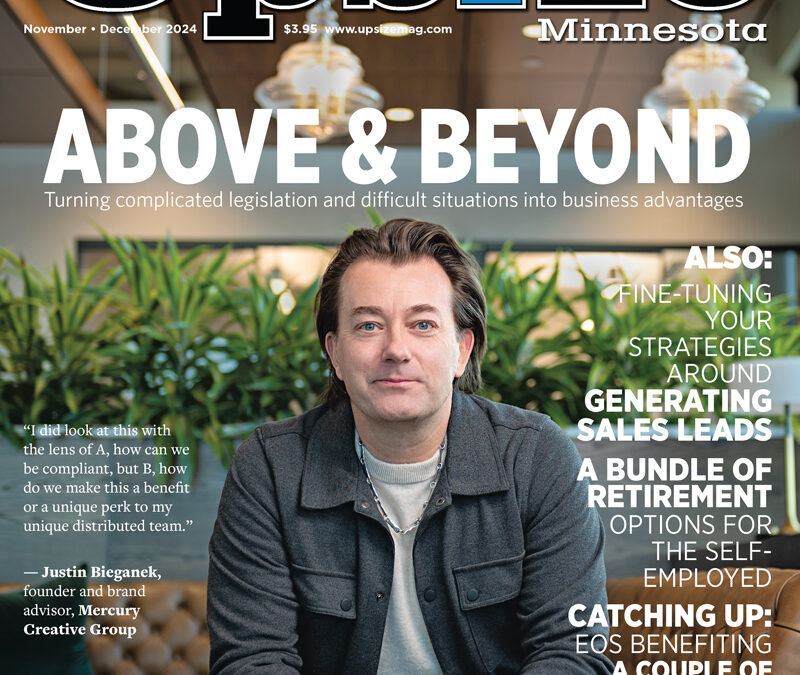
When the state Legislature passed a law requiring employers to provide paid leave and safe time for employees, Justin Bieganek started hearing differing details from friends, colleagues and peers.
1, Don’t pretend the last 18 months never happened. Employees have dealt with things they’ve never faced before and it’s important to understand the impact.
2, Having had ample time to reflect and spend time with family, many employees may not be ready to go back to how things used to be.
3, Giving your team time to come together to share values and how the last year has changed them could empower them and build alignment around a shared purpose.
4, Have regular discussions around purpose, vision, values, and goals. Having a team that’s aligned will reduce friction and disengagement.
Related Article
A business owner’s guide to surviving a bank crisis
Reignite your team by navigating Covid-changed dynamics
As a leader, you have a lot on your plate right now. Toward the top of that list: planning for a transition. Whether your team is coming back to the office, continuing to work remotely indefinitely, or adopting a hybrid model, chances are, you’re navigating new waters. There are many things to consider, including technology, resources, productivity tracking, processes, and operations. But what about the people?
How has your team shifted because of Covid-19? How have your employees changed in the last year, and how will those changes affect your team’s dynamic?
We’ve worked with several organizations managing transitions, and what we’ve learned may help you navigate the post-Covid landscape. Taking the time to address the trauma associated with change (especially in the context of a pandemic), respecting the leadership within each team member, and considering how your team dynamics may have shifted can set the stage to reimagine, reengage, and reignite your team.
Address the trauma of the last year
Humans are built to move on, and quickly. However, as tempting as it may be to sweep the last year under the rug, that’s probably not the most productive strategy. Your team has likely had to deal with stresses – both personally and professionally – that they’ve never had before. It’s important to understand the impact of that new pressure and what individuals need to do to feel whole.
Understandably, many individuals are looking at their purpose right now. They’ve had opportunities to reflect, spend time with family, maybe try new hobbies, and they might not be ready to go back to how things used to be. You may have heard about the “Great Resignation” threatening to void organizations of some of their top employees, who may be looking for clearer alignment between their own vision and values and those of their employer. Allowing your team the space to come together to share how they’ve changed, what they’re passionate about, and what they personally value can build trust, transparency and alignment around shared purpose and collective values.
Respect the leadership within each team member
Any time of great change has an impact on an individual, and the last year has been full of changes. The members of your team have learned and grown through the pandemic, and they likely have fresh perspectives they didn’t have before.
This is an opportunity for the members of your team to understand each other on a human level. Who are your teammates, what motivates and inspires them and how can you best communicate with them? You can use an assessment to help your employees work through some of these insights, or you can offer time for self-reflection and discussion. Consider what each team member has to offer and how their strengths can contribute to the rest of the team.
Consider your team dynamics (and how they might have shifted)
Finally, it’s important to consider how the changes of the last year, the changes within individuals, and the changes to your policies may have shifted the dynamic of your team. How well your team works together impacts organizational effectiveness and customer experience, among other indicators of organizational effectiveness. It’s worth taking the time now to make sure the engine is running smoothly rather than to wait for troubles down the road.
Not sure where to start? We recommend turning to the “8 Aspects of Team” model as a guide. This balanced systems approach ensures nothing is missed as you set the framework for an effective team.
8 Aspects of Team:
Shared Purpose — As you plan for the future of work after Covid, it’s time to recalibrate around a shared purpose. A team that works together toward a common vision is more likely to achieve it than one without clarity and focus.
Agility — If we’ve learned anything in the last year, it’s that employees want flexibility. The ability to adjust is vital to organizational survival. Take the time to determine with your team how to meet both the needs of individuals and the needs of the organization.
Collaboration — Once the team has a defined purpose and the resources necessary to work together effectively, collaboration can get the job done. Does everyone on the team have access to the tools and individuals they need to work together effectively?
Inclusion — Now more than ever, it’s important to be open to the different things people are going through. Be cognizant of team members’ experiences as you make organizational decisions.
Trust — Build a circle of trust by encouraging open and honest communication. Give employees opportunities to share what they’re going through and what struggles they might be having. This is especially important in a remote or hybrid setting, where employees might feel pressured to only discuss business when speaking with one another. Encourage sharing and connection.
Alignment — Have regular discussions around purpose, vision, values and goals. Having a team that’s in alignment around these — and having individuals whose own values and purpose align with that of the team — can reduce friction, resentment, and disengagement.
Process — A consistent process promotes efficient and effective work, higher engagement, and improved customer satisfaction. Your processes likely need to adjust for the current reality you are in and any changes you may be making to where and how employees will do their work.
Continuous Improvement — All aspects of team come together to foster a culture of continuous improvement. Change might be scary, but it’s an opportunity to really focus on how your team can come together better.
We’re all eager to get back on track after the uncertainty of the last year, but we can’t overlook what’s changed and how it will affect the future of work. Dedicating just one or two days out of the calendar year to charting that course together, and recalibrating as necessary along the way, will help you navigate through any rough waters that come your way.