Jay Sachetti joined Jeff O’Brien, partner at Husch Blackwell and Dyanne Ross-Hanson, president of Exit Planning Strategies talked about the market for mergers and acquisitions, exit planning opportunities for companies that don’t end up for sale and how companies can maximize their eventual sale price during an early October panel at the first Upsize on Tap event at Summit Brewing Co. in St. Paul.
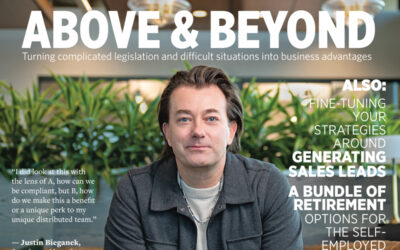
When the state Legislature passed a law requiring employers to provide paid leave and safe time for employees, Justin Bieganek started hearing differing details from friends, colleagues and peers.
Every company has something unique to offer to someone. The challenge is to figure out what and to whom. In the marketing world, that’s called positioning.
What is positioning? Essentially, it’s taking a stand. Whether you’re developing a position for your overall company or a specific product, the process forces you to define exactly whom you want to talk to and exactly what you want to tell them. Done right, a strong position will strengthen both your brand image and your competitive advantage.
Positioning is sacrifice The hardest part of choosing a position is coming to terms with what you’re giving up. The whole point of positioning is sacrifice. You have to pick the one core benefit you’re best at and let go of lesser benefits — even though they might be things you’re also very good at.
This can be difficult, especially if you excel in many areas. But taking a strong stand means relinquishing all others so you can focus on the single thing that gives you the unique advantage with your target customers.
Many companies want to say everything. Unfortunately, saying everything is like saying nothing. People can’t remember a laundry list of benefits. If your focus is too broad, your position becomes mushy. And forgettable. Narrowing it gives you more power to create a message that sticks in people’s minds.
Think of your circle of friends, and how you would describe each of them in a sentence. Funny, shy, contemplative, driven — each stands out in a different way. Obviously, their total personalities are more complex, but they each have a few distinct qualities that come to mind first.
Similarly, your position should, in a single sentence, describe how you want your customers to think of you. It can’t describe all that you are; but it should describe the one thing that makes you special.
Claiming your territory Think of the market as the sandbox you’ve chosen to play in. Your position is like a line in the sand separating you from all others in the sandbox. It blocks off the specific territory you’re claiming as your own, and tells others why your part of the sandbox is better than the next guy’s.
To claim the right position for your business, you need to look at three things: What you’re good at, what your customers care about, and what territories your competitors have already claimed.
First, look critically at your organization to identify where your core competencies are. The position you take must be built on something you’re good at because it represents a promise you’re making to your customers. You have to be able to deliver on that promise; otherwise your customers will see through your ruse and reject your offer.
Second, figure out what’s important to your customers. How do you find out? Ask them. Understanding what your customers care about is crucial in staking out a position that’s relevant. Say you sell wedding gowns and you offer them in more colors than anybody else. Selling red, purple and chartreuse wedding gowns may certainly make you unique — but it won’t make you relevant to most brides, the majority of whom are still in the market for a white one.
Finally, learn as much as you can about how your competitors position themselves. Why? To make sure you stake off a position that sets you apart. If someone else already owns a position, you can’t really lay claim to that territory. At least not easily. Yes, it’s possible to invade a competitor’s territory and take it over for yourself. But be prepared to invest the marketing resources it will take to fight for it.
Once you’ve done the above homework, then the fun begins! You can start sorting through all the information to decide which stand you’ll take in the sandbox. It’s a highly creative, somewhat subjective, and not always easy process.
Rarely is there only a single position you can claim. But there’s always a best one. We call it the positioning sweet spot, the territory where organizational strengths, customer needs, and competitive advantage overlap. Your goal is to pin down the one thing you’re good at, that matters to your customers, and that no other competitors are talking about.
If your competitors are larger than you, maybe you’ll position yourself as offering friendlier, more personal service. If your quality is higher, maybe you take a stand on that. If you’ve got special product development capabilities, perhaps you’ll stake your claim on bringing customers innovation.
Developing your position helps you communicate a clearer, more memorable message about the benefits you offer. It also helps you hone in on the select audience most likely to want what you offer. As a result, you can go to market with a stronger voice, and direct your marketing resources toward sending a more relevant message to the people you’re targeting.
Your position gives you a benchmark to measure creative strategies against — to make sure you’re sending a message that goes beyond grabbing immediate attention and works to build long-term loyalty.