Jay Sachetti joined Jeff O’Brien, partner at Husch Blackwell and Dyanne Ross-Hanson, president of Exit Planning Strategies talked about the market for mergers and acquisitions, exit planning opportunities for companies that don’t end up for sale and how companies can maximize their eventual sale price during an early October panel at the first Upsize on Tap event at Summit Brewing Co. in St. Paul.
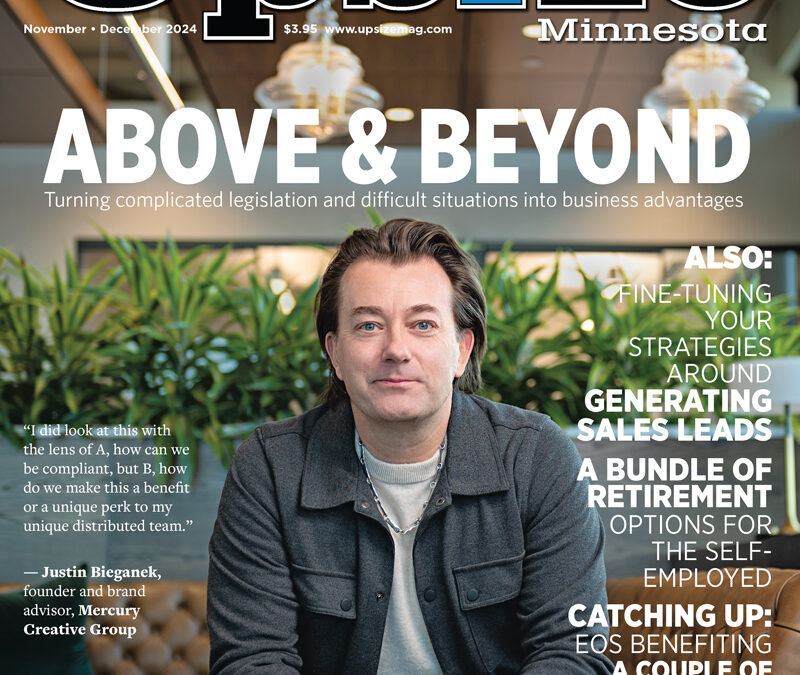
When the state Legislature passed a law requiring employers to provide paid leave and safe time for employees, Justin Bieganek started hearing differing details from friends, colleagues and peers.
1, The simplest way to enter Web3 is investing in digital assets. Before investing, a business’s board and leadership team need to understand the risks associated with such investments and agree upon their risk tolerance
2, Many large consumer-facing brands are accepting crypto payments for goods and services. Most use third-party payment providers such as Flexa or Bitpay, which makes it easier for brands to convert assets to Fiat to avoid accounting and tax complications
3, Non-fungible tokens (NFTs) are digitally designed so they can’t be replicated and are created with blockchain technology that provides unique ID codes
4, The metaverse is another example that is gaining a lot of momentum but it’s also the most resource intense to start. Many larger businesses are setting up shop and consumers are interested
Web3 is the next evolution of the internet with a promise of transparency and decentralization creating a more secure and private place for users to conduct business. The internet is in a constant evolution from Web1 where users searched for answers but couldn’t create or interact with content to Web2 where users can create content and share info, but they don’t control their data, big corporates do. Web3 is the promise to shift that control back to the users and provide more transparency through distributed ledgers otherwise known as blockchain technology.
In theory, blockchain technology has the power to disrupt the way business is done today, potentially eliminating the need for many third-party services. It also offers new ways to generate revenue. A handful of popular brands are already embracing Web3 and setting the bar for other businesses to compete. There are many entry points into Web3, some easier than others to get started. From easiest to more complex these options include investing in digital assets, accepting crypto as payment, minting an NFT (non-fungible token) and setting up shop in the metaverse.
Investing in digital assets
The simplest way to enter Web3 is investing in digital assets. Bitcoin and Ethereum are the two most known digital assets. Companies like MicroStrategy are quite bullish on their investments with these alternative assets. Before investing, a business’s board and leadership team need to understand the risks associated with each of these alternative assets and agree upon their risk tolerance, especially as regulation of this area continues to evolve.
Companies can custody these assets directly through an exchange or use a third party that helps eliminate some of the complexity from these types of investments. Not all exchanges are created equal as we saw earlier this year. It is critical that before investing, a business should understand how the assets and exchanges they are considering work, as many are not regulated and there potentially is a lot of risk associated with such investments.
Accepting crypto payments
If using a third party, the next way to engage in Web3 is accepting crypto as payment. Consumer-facing brands are leading the way with popular brands such as Microsoft, Overstock, Whole Foods, Starbucks, Home Depot, AT&T and the Dallas Mavericks accepting crypto payments for goods and services. Most are using third-party payment processing providers such as Flexa or Bitpay. That makes it easier for brands to embrace Web3 and convert digital assets to Fiat to avoid accounting and tax complications.
Minting NFTs
An NFT is a non-fungible token and is digitally designed so it can’t be replicated. It’s created using blockchain technology that gives it a unique identification code. Most people think of art when they hear NFT but an NFT can be anything digital. There are no rules for creating NFTs and creativity is the only limit in making them, which is also known as minting.
Brands are minting NFTs as a way to build brand loyalty, offering limited edition collectables often designed by a well-known artist. Some brands sell them, some offer them as contests, either way they are wildly popular with brand enthusiasts. It’s the rarity that makes them popular and valuable. Recent successful brand NFT projects include Hot Wheel’s NFT Garage Series that capitalized on the collectible aspects of Hot Wheels. Another example is Taco Bell’s taco-themed NFTs where brand loyalists essentially bought and resold digital tacos. NFTs can be bought and sold at trading platforms like Rarible, OpenSea and Crypto.com.
Welcome to the metaverse
The metaverse is another example that is gaining a lot of momentum but it’s also the most resource intense to start. Businesses are setting up shop and consumers are buying in. Nike is a great example. The company built parks and sport courts where brand enthusiasts can play — and they can pick up new Nike gear while they are there.
Stella Artois has built virtual racing tracks where you can breed and race your own horse. There are limitless possibilities that brands can do to grow new audiences, create new revenue streams and capitalize on truly unique customer experiences.
These are just a few examples but there are many more ideas and projects under development that could disrupt business quickly if they take hold. Web3 is in its infancy, but with technology, change happens quickly.
Businesses need to be educated on what is happening now and what future possibilities are so they can keep their competitive advantage or create one. Although there is a wealth of information available, there has been a lack of content available that deciphers all of the information and presents it in a way a business can quickly understand and consume the information. That’s starting to change.