Jay Sachetti joined Jeff O’Brien, partner at Husch Blackwell and Dyanne Ross-Hanson, president of Exit Planning Strategies talked about the market for mergers and acquisitions, exit planning opportunities for companies that don’t end up for sale and how companies can maximize their eventual sale price during an early October panel at the first Upsize on Tap event at Summit Brewing Co. in St. Paul.
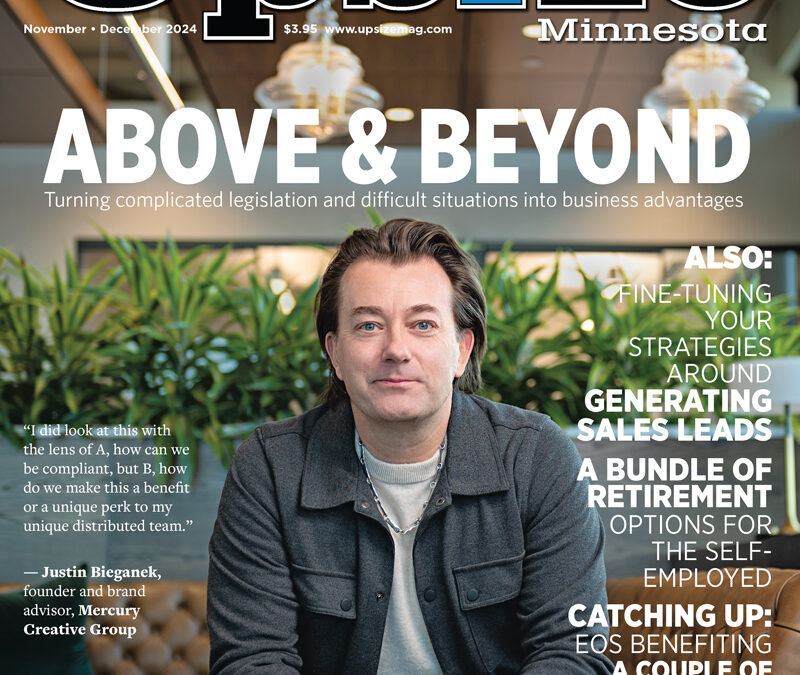
When the state Legislature passed a law requiring employers to provide paid leave and safe time for employees, Justin Bieganek started hearing differing details from friends, colleagues and peers.
1, Be curious. Dip into peoples’ psychology and figure out what makes them tick to design an authentic, healthy workplace.
2, Employees want to be part of something that matters. Communicate the company’s purpose clearly and consistently and tell employees how they impact the purpose.
3, Make sure your human resources efforts are a team effort. Have managers source their networks in search of the right people and help them expand what a qualified candidate looks like.
4, Examine your culture. High turnover indicates you culture is lacking. Examine your culture and take immediate action on things hurting your work environment.
Related Article
Consider offering a 401(k) SDBA for participant balance and control
The war on talent is real and it doesn’t look to be getting better any time soon. This workforce challenge has been a significant pain point for many business leaders. The answer to this issue is not simple or easy, and it’s certainly not found in the way we’ve always been doing things. The solution is multi-faceted and requires a people-centric approach with a healthy dose of curiosity and creativity.
The facts
According to a report published by McKinsey & Company in September 2021 more than 19 million people have quit their jobs since April 2021. Among the employees in their survey, 36 percent who quit in the past six months did so without having a new job in hand. Additionally, of those who were somewhat likely to leave in three to six months, nearly two-thirds would leave without a new job lined up.
Now is a really good time to get curious. Why would a person leave a steady paycheck in the middle of a very seemingly volatile, uncertain, complex and ambiguous world? McKinsey & Company cited three top drivers for leaving:
Not feeling valued by their organizations (54 percent)
Not feeling valued by their managers (52 percent)
Employees did not feel a sense of belonging at work (51 percent)
Unfortunately, these reasons don’t appear to be where most companies are putting their efforts to retain and attract employees. Conversations around business tables and across industries are focused on pay and sign-on bonuses, continuing to favor years of experience and ability to work nights and weekends and preferences for primarily in-person work. Leaders are feeling desperate but not ready or always willing to adjust their expectations.
What to do about it
Curiosity is a requirement for today’s leadership. Curiosity is a superpower that helps us better understand the perspectives of others while opening our creativity to find new ways of doing things. Leaders need to show curiosity by dipping into the psychology of people and design an authentic and healthy workplace.
Lead with purpose. Employees want to be part of something that matters, to feel they are adding value and contributing to bigger purpose. Leaders must first understand the purpose, or the why, behind the company. Then, leaders need to communicate the company’s purpose clearly and consistently to their teams and how each employee impacts the purpose.
Human resources is a team effort. Managers must be involved in sourcing and recruiting because they know the work and the workers the best. Ask leaders to source their networks and support the company’s social media posts. Reach into the employee base and ask the same, help them be successful by giving them communication/position information to share. Help leaders expand their definition on what a qualified candidate can look like. When you start to look at the work differently you may find more qualified workers could be retirees, disabled, students, or those only interested in temporary hours.
Capture your culture. If you have high turnover, it’s likely culture is lacking. Evaluate your culture to gain a realistic baseline and take immediate action on those things that are hurting the work environment. You can benefit from holding focus groups that include employees and leaders to gather the honest feedback you need. Ask powerful questions that give the insights you need, such as:
Where are we strong in our culture? What are the top opportunities for improvement?
Do you believe we have the right people in the right roles?
Do you believe your manager values your work and contributions?
Do you feel a sense of belonging in your team? Within our company?
How can we improve our sense of community and belonging?
Approach this evaluation with a beginner’s mindset and sense of curiosity, use empathy and be humble. Remember to strengthen and celebrate the elements that are going well as well as the opportunity areas.
Build and strengthen relationships. To get your employees invested at a deeper level, you must get involved with them at a deeper level. Work should feel like a beneficial part of life that provides fulfillment beyond income. Think about relationship in three levels: employee, team, and organization. Put deliberate effort into building the essential skills of emotional intelligence at each level. Provide opportunities for employees to get to know one another on a personal basis (this helps build community as well). Encourage team leaders from across the organization to get together on a regular basis to boost departmental collaboration. Invest in mentoring programs that give exposure to the big picture functions that make the entire organization run.
Are you ready to become a people-focused organization? It’s the future of work and it starts today.