Jay Sachetti joined Jeff O’Brien, partner at Husch Blackwell and Dyanne Ross-Hanson, president of Exit Planning Strategies talked about the market for mergers and acquisitions, exit planning opportunities for companies that don’t end up for sale and how companies can maximize their eventual sale price during an early October panel at the first Upsize on Tap event at Summit Brewing Co. in St. Paul.
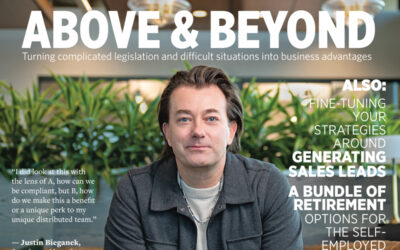
When the state Legislature passed a law requiring employers to provide paid leave and safe time for employees, Justin Bieganek started hearing differing details from friends, colleagues and peers.
1, You’ll fare better in a bankruptcy if your debt has been secured by being granted a security interest in an identifiable asset, or class of assets, owned by the debtor
2, Security interests are obtained through things such as mortgages, UCC security agreements, or by operation of statute, such as mechanic’s liens. The interest also must be perfected, which is the process of putting the public on notice of your interest
3, Unsecured creditors are separated into their own class and basically receive a proportional share of what, if anything, is left. They typically fare poorly, if they receive anything at all
4, Upon a default, you should act quickly to exercise creditors’ remedies so that your collection action can be completed or a settlement reached before bankruptcy is filed
Related Article
Ten tips for creating strong business agreements and contracts
Past due receivables can cause significant stress among business owners.Emotions can reach a boiling point when, instead of a much-anticipated check, you receive a “Notice of Bankruptcy Case.” What does this mean and what can you do to protect yourself?
What does it mean that your customer declared bankruptcy?
From a practical perspective, a bankruptcy filing means three things:
Your customer is experiencing financial distress that impairs its ability to pay off debts
You need to immediately stop all collection activities
You need to appropriately participate in the bankruptcy process
The main types of bankruptcy you are likely to face are a Chapter 7 bankruptcy or a Chapter 11 bankruptcy.A Chapter 7 bankruptcy is a liquidation of all non-exempt assets. A Chapter 11 bankruptcy is a corporate restructuring seeking a modified payment plan with all creditors over time. A Chapter 7 is what you are likely to see if your customer is an individual or a sole proprietor operating under a DBA. Since corporations or limited liability corporations typically just go defunct when insolvent, they rarely file Chapter 7 bankruptcies. They’re more likely to file under Chapter 11.
How well your business will fare in a bankruptcy depends primarily on one thing — is your debt secured or unsecured? A secured debt is one where you have been granted a security interest in an identifiable asset or a class of assets owned by the debtor. Security interests are obtained through things such as mortgages, UCC security agreements, or by operation of statute, such as mechanic’s liens.
That said, a security interest alone is insufficient to make the creditor “secured” for the purposes of bankruptcy. That security interest must be “perfected.” Perfection is the process of putting the public on notice of your security interest through taking an action such as recording a mortgage with the county, filing a UCC financing statement with the Minnesota Secretary of State or recording a mechanic’s lien statement with the county. If a security interest is not perfected as of the date of the bankruptcy filing, then it is not valid and you’ll be treated as an unsecured creditor.
A secured creditor will either be paid the value of the collateral, or else will likely be able to ask the court to remove the collateral from the bankruptcy proceedings so the asset can be monetized through processes such as foreclosure. As such, secured creditors will likely eventually be made whole or will escape with a moderate haircut.
Unsecured creditors are a different story. These creditors are aggregated as a class and receive a proportional share of any non-exempt, unencumbered property owned by the debtor and liquidated during the bankruptcy. Property is “exempt” if it is subject to a statutory protection. Property is unencumbered if it is not subject to a mortgage, security interest or statutory lien.
As you may imagine, most property owned by a debtor tends to be either exempt or encumbered, so unsecured creditors generally fare very poorly in a bankruptcy, typically receiving no more than 10 percent of what they are owed.
What to do if your customer declares bankruptcy
What to do depends on your creditor status and which bankruptcy chapter is declared.
If you are an unsecured creditor in a Chapter 7 bankruptcy, there is little or nothing to do. The initial bankruptcy notice will specify whether the bankruptcy is expected to be a “no asset” case, which means it is not expected that any money will be available for unsecured creditors. In that case, there is nothing for you to do and you likely will never recover anything from your customer.
If you are an unsecured creditor in a case where a distribution to unsecured creditors is anticipated, you will need to submit a “proof of claim” form to the bankruptcy court by the deadline specified in the bankruptcy notice. This form and its submission instructions can be found online at the Minnesota Bankruptcy Court website.
If you are a secured creditor, or if the bankruptcy is a Chapter 11 bankruptcy, you should contact an attorney as soon as possible to preserve your legal rights. You will need to take steps that typically go well beyond the simple submission of a proof of claim.
What should you do to protect against future customer bankruptcies?
Only two things can protect your business against a customer’s bankruptcy — speed and security.
“Speed” refers to exercising creditors’ remedies upon default so quickly that your collection action can be completed, or a settlement can be reached, prior to the customer’s bankruptcy. Even if the collection is not fully “completed” the mere act of being far enough along in the process can increase protection.
For example, if you sue your customer and obtain a judgment, that judgment, once docketed, becomes a lien on all real property owned by the debtor in the county where the lawsuit was commenced. This lien — called a judgment lien — survives bankruptcy if it is in place at least 90 days prior to the bankruptcy filing.
“Security” refers to the process of turning otherwise unsecured debt into secured debt that will fare much better in bankruptcy. Security can either be taken on the front end — by adding a grant of a security interest in the initial contract or documents executed between your business and your customer — or on the back end through the negotiation of what is referred to as a “forbearance agreement.”
A forbearance agreement between you and a customer who owes you money provides that you will temporarily forego collection action in exchange for the customer’s agreement to do certain things, such as grant a security interest to secure the prior debt. Through this process, unsecured debt can be transformed in secured debt that can withstand bankruptcy, if the security interest was granted at least 90 days before bankruptcy is filed.
In either a front-end or back-end case, consulting an attorney can ensure that the granting provision is properly drafted to meet all applicable legal requirements and to ensure that another creditor does not already have a prior security interest in these same assets. Holding a subordinate security interest in an asset is functionally valueless if the customer has no equity in the asset.
Conclusion
Bankruptcy is an imposing process that radically affects your ability to collect a past due receivable. The risk of bankruptcy cannot be eliminated, but can be mitigated through proper documentation and being expeditious in collection action.