Jay Sachetti joined Jeff O’Brien, partner at Husch Blackwell and Dyanne Ross-Hanson, president of Exit Planning Strategies talked about the market for mergers and acquisitions, exit planning opportunities for companies that don’t end up for sale and how companies can maximize their eventual sale price during an early October panel at the first Upsize on Tap event at Summit Brewing Co. in St. Paul.
When the state Legislature passed a law requiring employers to provide paid leave and safe time for employees, Justin Bieganek started hearing differing details from friends, colleagues and peers.
Fresh Energy, a non-profit in St. Paul dedicated to shaping policy that leads to carbon-neutral economies, works in a growing niche, but not one everyone knows about.
Add in the “Great Resignation” and the organization has been honing its strategies, not only for finding new workers, but for retaining those already on board.
The company has tried to personalize its job postings, including with them videos from the hiring manager so potential applicants will know who they would be working for, says Mat Krisetya, executive lead organizational health. Fresh Energy also sends interviewees questions in advance, so they are less nervous and can have a more comfortable conversation when they do apply.
“We want to personalize the things that seem impersonal when people apply for a job,” he says. “Anytime a person gets into an interview they are always nervous. We want to know who you are. If they are nervous, they are unable to reveal who they are. That’s what is important for us.”
It’s also working on its retention strategies, adding this year to its long-standing half-day Fridays during the summer new benefits such as allowing parents-to-be to accrue six weeks of paid time off from the previous year so they can take a full 12-week paid leave and allowing workers to begin vesting in their 403(b) retirement plans immediately.
“We understand there is life besides work,” he says. “We want to partner with them so they know that Fresh Energy supports their life outside of work.”
Fun on Facebook
Fresh Energy isn’t the only company trying out new strategies to attract workers. Carly Sutheimer, owner at C&T Siding & Windows, was at wits’ end. She’d been trying to hire laborers but even with signing and retention bonuses was struggling to get noticed.
“I had tried everything in the book,” she says.
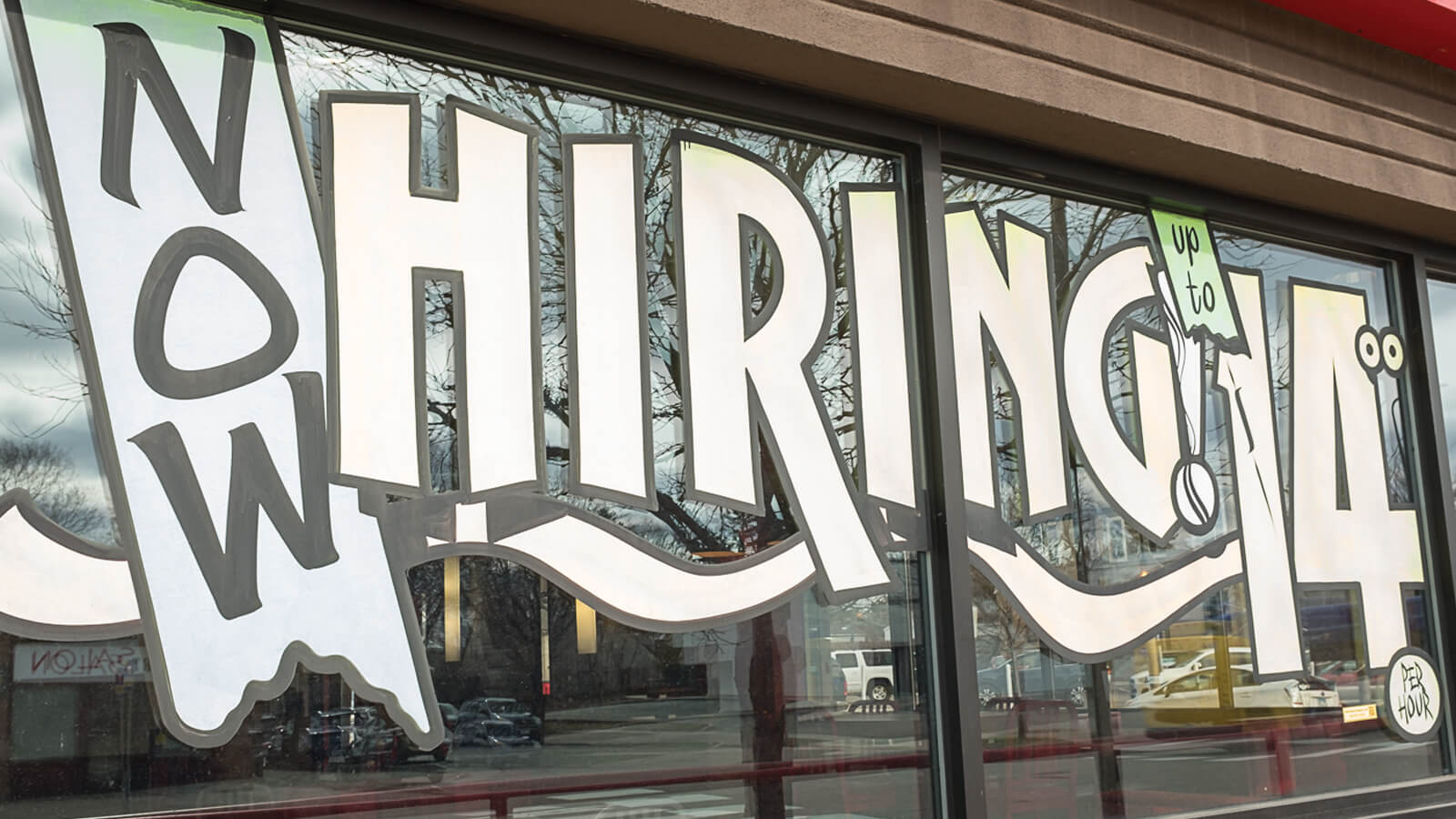
On a whim, she created a cheeky Facebook post saying workers could make $1 an hour — and the job wasn’t for them if they couldn’t show up on time or wouldn’t work hard.
“It was like a joke,” she says. “You wouldn’t believe it. I think it just caught people’s attention and made them laugh” Not everyone got it — some people commented on the post about how nobody would want to work for such a low wage. “But it was mostly to get people’s attention,” she adds.
And it worked. She ended up interviewing 14 applicants who responded to the post and hired four, three of whom were still with the company after several months “and have turned out to be great guys.” A similar post a few weeks later landed a quality salesperson.
“It got people’s attention,” she says. “That was everyone’s response was ‘we thought you might have a sense of humor with the ad you put out. It caught our attention.’ Along with the ad, the second thing that a lot of the guys said to me was that a lot of them were tired of being treated like a number.”
Sutheimer says once she gets people in the door, they often stay because of the flexibility and family feel, knowing that if they need to take a day off due to a family health or school situation, they’ll be ok. The ads just gave her a way to stand out.
“It just ended up catching people’s attention and got them in the door,” she says. “As soon as I got them in the door and told them what we offer, it was almost a done deal.”
Be creative
Sutheimer says she didn’t think the ads were that big a deal. But she’s a client of Pinnacle Business Guide Jon O’Malley, who owns Leadership Team Results. He says companies need to get creative and find ways to stand out.
“It was very tight before the pandemic,” he says of the employment market. “It’s just very much accentuated now.”
Small companies need to embrace their strengths — the ability to be more flexible and to treat their employees better by finding real human connections and getting to know them individually.
“Bigger clients, you literally can’t do that. It’s impossible,” he says. “There are a lot of really high caliber people out there for whom money is not their number one motivator for where they want to work. There are a lot of people where that is a big motivator, but small businesses can absolutely compete. They just need to understand they need to compete in those areas where they can compete.”
They need to be creative in finding people to hire. They can do that by tapping into their own networks and the networks their employees bring with them, O’Malley says. They need to try new things. Like Sutheimer. And like the CEO of a water heater installation company he works with who needed technicians. The CEO would sit in the parking lot outside plumber supply companies, find someone who looked like a candidate, chat with them as they walked in the store together and hand the person a flyer and a mug in the parking lot if he got a good vibe.
“He hired several good employees using that method,” O’Malley says. “Some of those guys would take that flyer out and give him a call. My point in all this is that level of creativity is what is needed in these times.”
It might not have been necessary a decade ago, but times have changed. Not only are many workers moving around a lot, but baby boomers are retiring and there is going to be a long-term shortage of workers.
“Entrepreneurs need to flip this switch,” he says. “This is not transitory. Demographically this contraction in the number of people available for the workforce is going to be a 20, 30 or beyond year problem before it starts getting better.”
Chelsey Paulson, chief strategy officer at Keystone Group International, echoes the need for creativity. She encourages companies to experiment and to take feedback from employees. Executives need to be present on social media, particularly LinkedIn, recruiting for talent, but they can’t do the job alone.
“It’s everybody’s job to recruit,” she says, adding that it is a crucial time to be implementing new strategies.
“If you’re not trying to think differently, think innovatively and gather a variety of opinions with any decisions you are making, you are losing out,” she says. “We’ve done a lot of innovation sessions with our clients looking at ‘how do we gather more feedback.’”
There is no silver bullet, other than using a variety of techniques to find employees, she adds. Referrals, with bonuses spread across multiple payouts over time, are one strategy. Paulson says companies that have, in the past, offered internships are now approaching those jobs as more of an apprenticeship, where they train workers and, if it feels like a fit, hire them on long-term.
“When you’re making these hires, you need to be looking for drive, for motivation, for desire to learn and to grow,” she says. “If that is part of who they are, this is why the apprenticeship is genius. Bring them in, see what they can do. You’re not committed to anything. But it’s a try before you buy for both sides.”
Hiring from different pools
One final strategy is being willing to shake up the traditional 9-to-5 workday and find other resources for hiring that bring in talent unwilling or able to work traditional shifts, but valuable for their skills. Paulson cited Hire Our Heroes, which focuses on veterans, and Bus Stop Mamas, a firm focused on helping mothers find flexible employment.
Mary Kay Ziniewicz, founder of Bus Stop Mamas, says the organization has grown significantly in recent years. A few large companies have jumped on board.
But more than 90 percent of the recruiting base has been small businesses realizing the value in connecting with talented mothers looking to get back into the workplace. Bus Stop Mamas is helping them find mothers in roles ranging from administrative assistant to the C-suite.
“This message we believe that equity comes through flexible work is really catching on and understood by employers in a new way,” Ziniewicz says. “‘We felt the burden when they left. How do we get them back and how do we keep them? How do we attract and retain women throughout their careers.’”
Technology for hiring and retention
Alice Walker, principal with HR WoRx, touts the use of technology as a way of improving chances for a successful hire. An applicant tracking system, she says, not only allows you to receive information during an interview process that can be turned into a payroll record. The programs also usually contain aggregators that allow you to create a requisition and then post it to many sites at the same time.
“I tell my clients push it out everywhere you can,” she says. “Make sure you hit every free site, then maximize your dollars with all the other job advertising sites you want. You can cast a wider net.”
The applicant tracking system also gives a timelier response.
“As soon as they do apply, you need to jump on them because there are probably 10 other companies calling,” she says. “Timing is everything.”
It isn’t technology-related, but Walker also recommends that companies dial back on the requirements they include in job postings. When she started in recruiting, Walker says frequently “the manager would take every skillset missing in their group and put it into one position,” she says. “Where do you want me to post that? Fantasy Land?”
The market has shifted. With workers having more leverage, companies are now having more success asking for a few “must haves” and more characteristics such as eagerness to learn.
Applicants are “more interested in getting a job where there is a chance to go somewhere in their career,” Walker says.
Fixing your retention strategies
Finally, emerging HR technologies allow for the creation of online bulletin boards where potential candidates who may not be interested in a job right now will post contact information you can use to build a pipeline when other jobs open later on, Walker says.
Creating communities like that, Walker says, can also help with retention, she says. For example, having people in the profession people can go to besides a supervisor when they feel overwhelmed with their job can be valuable.
And at a time when it’s difficult to hire new people, it’s valuable to try and retain the ones you already have on staff.
Make sure you understand what makes your employees tick. It doesn’t always have to be money, Walker says. If you’re hiring a maintenance technician, a form of recognition for a senior person in that role on staff might be the opportunity to become a mentor to a junior technician you hire knowing the person needs some training.
“You’re naturally creating a career path now,” she says. “If there’s room for growth, that’s what they’re looking for.”
Steve Schad, president of fractional HR provider Optima Advisory LLC, says where companies used to focus in surveys on job satisfaction, they must now look at engagement and their thoughts on the employee experience.
“It really is from the vantage point of the employee in terms of when I join a company, what is my experience like?” he says. “When you think about the work experience through that lens, it looks very different from looking at it through management’s lens.”
The shift is being driven by the power employees have in this environment. Companies need to make sure, for example, that managers are positive, motivating, fair and open to hearing employee concerns. Employees these days, Schad says, also care immensely about making a difference and ensuring their work is in line with their values.
“That starts to point toward levers the company needs to pull in order to be a well-run organization that treats its employees in a way that makes them A) work there if they don’t and B) stay there once they get there,” he says.
And it gets well beyond dollars and cents. Schad says one simple thing organizations can do is implement a goal setting and performance management process.
Research indicates that if people have clear goals and know their roles, “that is one of the key drivers of employees being committed to an organization and intending to stay,” he says. “That’s motivating to people. It’s surprising how few organizations take the time to put in place a process around goal setting and performance reviews, but it’s one of the easiest things you can do that is of almost no cost to the organization.”
While small businesses can’t always compete on pay and benefits, Schad says it also is important to keep up on the marketplace and at least be competitive in compensation.
“You don’t want to overpay,” Schad says. “On the other hand, you want to make sure you are competitive. … You want to neutralize pay and benefits as an issue employees are going to get stuck on.”
Keep culture in mind
While culture can be a bit of a buzz word, observers say it is an important piece of employee engagement and retention. A company should be able to tell workers about its culture and should also stick to it.
“Without that, companies are just making it up,” Schad says.
Paulson says hiring for culture is more important than for skill. If potential employees fit well, they can and will want to learn many of the skills you need. “Both are important, but it needs to feel like it’s the right fit,” she says.
Adds O’Malley, during this time, the need for sticking to your culture is vital, even if it means letting go of a high performer who just doesn’t fit with the rest of a team. He knows of a company that took a six-figure sales hit in letting someone go. The company did so because the high achiever was poisoning the office atmosphere. Leadership figured it could find another good salesperson, but couldn’t fix a rotted culture.
“The president spoke up and said ‘I care more about the culture than the bottom line’” he. “‘We’ll recover that. We’ll find the right person.’ A lot of companies won’t do that.”