Jay Sachetti joined Jeff O’Brien, partner at Husch Blackwell and Dyanne Ross-Hanson, president of Exit Planning Strategies talked about the market for mergers and acquisitions, exit planning opportunities for companies that don’t end up for sale and how companies can maximize their eventual sale price during an early October panel at the first Upsize on Tap event at Summit Brewing Co. in St. Paul.
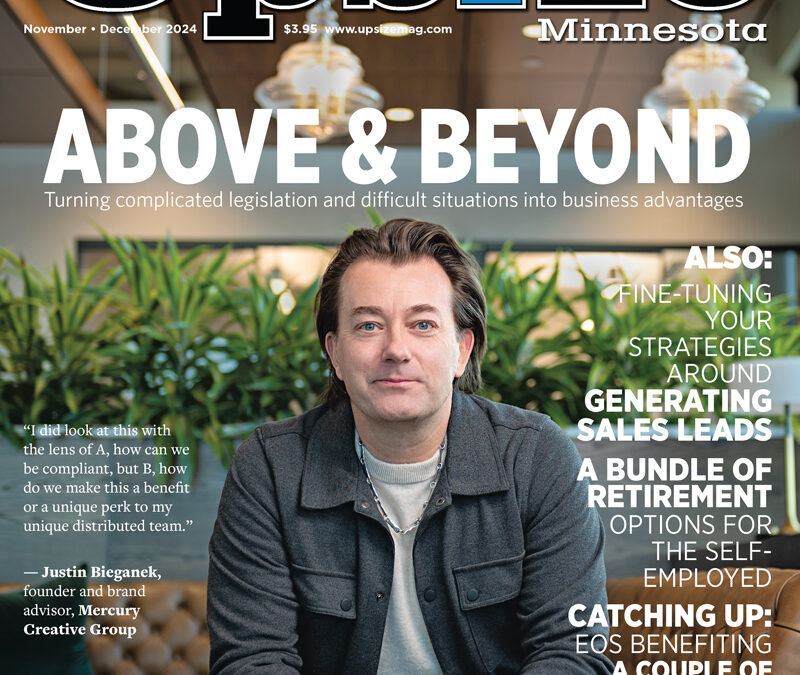
When the state Legislature passed a law requiring employers to provide paid leave and safe time for employees, Justin Bieganek started hearing differing details from friends, colleagues and peers.
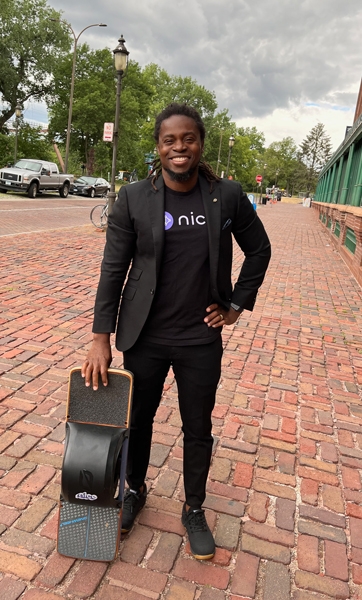
The CEO of Nice Healthcare zooms up on his one-wheel electric scooter, removes his helmet and plumps up his dreadlocks for a photo. Then Thompson Aderinkomi describes his mission, to simplify healthcare and cut its cost in half.
“The ongoing purpose of the business is to get the most possible people the best possible healthcare,” he says. Then he describes his formative experience with the U.S. system. His young son had a fever. He went back and forth to the doctor, only to finally get a correct diagnosis of pneumonia and a quick cure of antibiotics the fourth time. Then he got the bill: $664.28.
“I said, ‘I’ve had enough. I’m going to see what they have here,’” and he barged into the clinic’s rooms. An X-ray machine had a list price over $100,000. “I Googled and saw X-ray machines for $10,000 and it fit in my car. And it’s a Prius, too.” Many rooms and their cupboards were empty. “I walked back to my wife and said, ‘I can do this. I can create a clinic that’s better than this, that costs half as much.’ But how do you do it? You have to take things away.”
First to go: The building. “Only 30 percent of primary care needs to be done in person,” he says, adding that Nice’s providers go to people’s homes for that. The rest is done via phone call, video visit or a chat. “That’s how the unit economics work.” Nice Healthcare doesn’t take government reimbursement, so the “armies of people filling out those forms” are gone as well.
And Nice Healthcare takes what he calls an “ethical margin” on lab tests and prescription drugs. The industry standard markup “is 200 percent to 1,000 percent,” on drugs. “We’re passing these savings to patients and we deliver it to them for free.”
Fresh from a $30 million Series A fund-raising round, the 5-year-old Nice Healthcare now serves 500 clients in 12 states and employs 200 people. Insurance brokers sell the plans to small- and mid-sized businesses as a benefit on top of a traditional health plan. But his previous company with the same business model is defunct.
“I worked on it for three years, raised $8 million and then the investors kicked me out of the company and proceeded to destroy the company,” he said. What did he learn from that? “Don’t work with people that want to do bad things to you.” How would you know in advance? “You can’t know,” so the only route is to be yourself.
“The only thing that makes love possible is to open up your heart. Same with changing the world,” he said. Another founder told him, “You should be your authentic self so people can find you.”
Aderinkomi’s parents immigrated to Minnesota from Nigeria. He was born here. He has a master’s degree in biostatistics and an M.B.A. from the University of Minnesota. But he talks plainly, not like a policy wonk.
“I believe healthcare is simple, but everyone wants it to be complicated,” he says, citing insurance groups whose executives are paid millions. Why does he keep fighting? “The healthcare system has been abusing the people of this country for decades. I want to exact revenge.”