Jay Sachetti joined Jeff O’Brien, partner at Husch Blackwell and Dyanne Ross-Hanson, president of Exit Planning Strategies talked about the market for mergers and acquisitions, exit planning opportunities for companies that don’t end up for sale and how companies can maximize their eventual sale price during an early October panel at the first Upsize on Tap event at Summit Brewing Co. in St. Paul.
When the state Legislature passed a law requiring employers to provide paid leave and safe time for employees, Justin Bieganek started hearing differing details from friends, colleagues and peers.
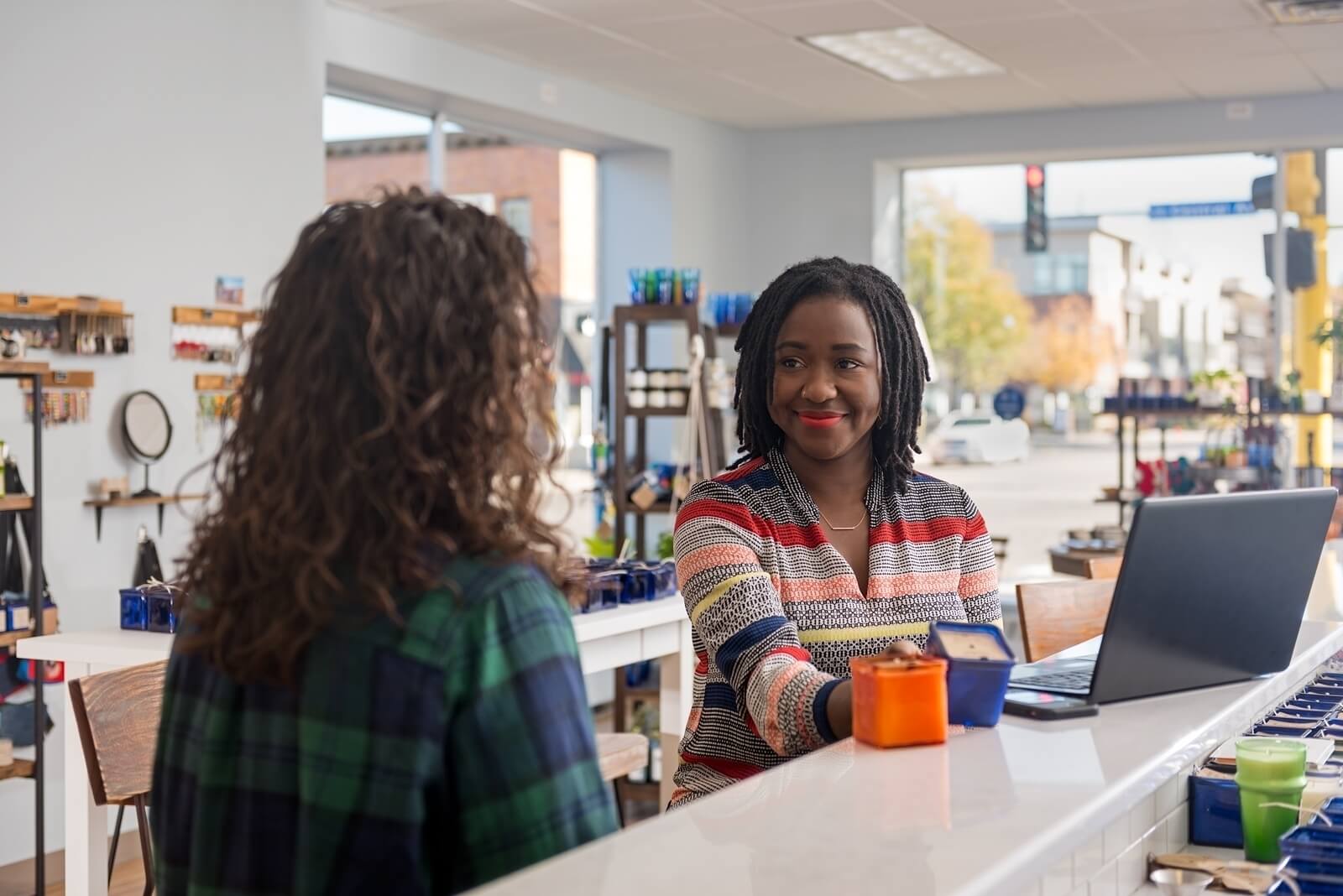
Before Roseline Friedrich opened Roseline’s Candles in Northeast Minneapolis this fall, she was selling her candles via her website.
“That way, when I went online to say ‘hey, come buy from me,’ I wasn’t taking orders via direct messages or phone calls, I was just fulfilling orders from my site.”
And she had a pretty good year, despite the COVID-19-related shutdown of most in-person retail throughout 2020, by driving people there through social media and video posts on Instagram that automatically post to Facebook, and other sites. She also boosts ads on Google regularly. Her husband handles those sites. But Instagram is the biggest priority, because a lot of her followers are looking for local artists and businesses to support.
Friedrich had received some financial assistance from the Black Business Association in North Minneapolis that allowed her to take a social media marketing class, then invested significantly in advertising through those channels and the rest, as they say, was history.
“That was the world we lived in,” she says. “We were all kind of existing on the web. So, I just took it and ran with it.”
Growing going forward
Like many business owners, Friedrich had to figure out how to keep getting the word out about her company when budgets were tight, both for her and her customers. That social media education and the accompanying posts that followed became her lifeblood. She maintained her excitement when people responded to her posts.
“What really got me going was knowing that when I engage with people on social media, they were very, very excited about it,” she says, adding that the company has a couple people who help with posting especially since opening the physical location has kept her busy. “We are really intentional about how much time and effort we spend on our marketing. I would never not have a budget for marketing.”
She monitors her site’s analytics regularly and can tell when she hasn’t done an Instagram post for a while. “We see a drop in traffic and also a drop in sales if we’re not pushing.”
The store sells candles and other mostly locally sourced gifts from local artists that are made with sustainability in mind. She teaches candle-making classes, a skill she discovered during an Airbnb experience after coming to Minnesota from west Africa 20 years ago, graduating from Roosevelt High in Minneapolis and then the University of Minnesota. She also sells them in bulk to local stores in larger quantity orders.
Until as recently as early 2020, it hadn’t been a goal of Friedrich’s to open a store like this, but she started selling to wholesalers while also working full-time as a mental health practitioner. “I liked my job,” she says. “I didn’t intend on quitting my job within the first few months of my business, but that’s what happened. A lot of wholesalers don’t want someone who is just doing a hobby.”
Now she wants to open the gift stores in other up-and-coming, fast-growing suburban cities and find a warehouse where she can expand the wholesale portion of the business.
“A lot of those people have to travel out of their city to do stuff,” she says. “My hope is someday to have a place like this closer to them, so that if they want to just go shop for a quick gift or take a candle-making class and go home, they don’t have to make a whole day out of it.”
Roseline Friedrich, owner of Roseline’s Candles,
teaches candle making and sells locally sourced
sustainable gifts from her new Minneapolis store.
Experiment and try things
Friedrich’s social media instructor was Pam McCurdy, founder of The Marketing Troupe, a local publicity and consulting firm. McCurdy says social media can be hugely effective, but people need to know their audience.
For example, a restaurant selling hamburgers will do most of its sales to people living within two miles of the venue. A lawn service also has about a two-mile radius. So, make sure messages are targeted toward those folks. A restaurant with more of a special occasion feel, on the other hand, might have a further reach.
“Are you connecting with your neighborhood?” she says, adding that if you own a store in Minneapolis “don’t try to get people to come from Duluth to your shop.”
Get back to the basics, McCurdy says. Tag locations as much as you can. It helps manipulate algorithms. And the best spots for specific businesses to market vary by industry. Although an accountant might do well using LinkedIn, McCurdy says Instagram typically is the best tool for small businesses, especially if it has visually appealing merchandise. “They’re life and death for small business,” she says.
Wild wild west
While social media can be a great and inexpensive way for businesses to get found, McCurdy adds that companies should “look at the whole toolbox.” E-mail marketing or some other strategy might be the right answer for others.
Alison Buckneberg, a strategist with Words at Work, says now is the time to be creative, to try new strategies — or old ones that might not have worked in the past under different circumstances — to stay in front of people.
“Reinvention, pivoting and being nimble are the name of the game,” she says. “One of the things we’re recommending to clients right now is don’t be afraid of having a marketing fail. It’s the wild, wild west out there for marketing these days.”
Marketers, she says, are being tapped for results in a lot of areas right now, ranging from diversity and inclusion to finding employees to finding sales leads. That leads companies to sometimes try campaigns that paint with a broad brush. She’s found the opposite to be more impactful.
Words at Work worked with one local small manufacturer on a paid LinkedIn campaign. The first post was more general, aimed at letting the larger audience know of the company’s existence. A subsequent post went out later to a much more niche subset of the original audience advertising a large piece of equipment the company sells.
“Within the first 24 hours they had 15 leads,” Buckneberg says. “That’s the type of lead generation they would typically enjoy from a trade show. They would expect to get 15 really solid sales qualified leads within a day.”
And they did so spending only around $2,000. When marketing on a budget, she adds, digital can be a very good friend. But depending on what the business is, Buckneberg recommends being open-minded and willing to throw caution to the wind, at least a bit.
“Try a LinkedIn campaign. Try a Facebook ad. Try an E-blast in a publication you haven’t worked with before,” she says. “Sniff out new ways — or maybe even old ways — go back to direct mail. Find some of these other tactics that might not have worked in the past, but you’ve always been interested in trying and explore them. You have to stay in front of people.”
But don’t necessarily try to reach everyone at once. Those narrowly tailored campaigns often end up being quite successful. It’s not, Buckneberg says, about the size of the splash. “It’s about getting the right splash.”
Fundamental focus
Clients of public relations and marketing firm Bellmont Partners spent much of the early part of 2020 dealing with the uncertainty brought on by the pandemic. They couldn’t meet in person or do many of the things they previously had done to market to customers and potential customers. So, they often came to Bellmont wondering how they could try new strategies and how could they better their foundational communications.
“There was this great mixture of innovation and embracing new ideas in marketing,” says Brian Bellmont, president. “At the same time, I believe the smartest companies really went back to the basics and really started to strengthen their foundational stuff.”
By foundational stuff, Bellmont means, for example, social media, blogs or websites. “Now nobody is going to be walking to your store, but they would be coming into your online presence,” he says.
Bellmont spent time making sure his own company’s online presence was as strong as it could be.
“We did a lot of that stuff,” he says. “We really wanted to increase both the quantity and quality of the engagement with our clients, our prospects and the industry at large.”
Specifically for him, that meant refreshing the website, shifting significant energy toward developing new blog content and starting a monthly newsletter.
“That’s been going ever since,” he says. “Those were all inexpensive things for us to do. And they really paid off for us. They filled some of the gaps of us not being able to have events or go to conferences or meetings with our clients. It didn’t cost anything extra, but it was a paradigm shift for us to focus on the digital aspects and strengthening those.”
Bellmont says a lot of his clients took similar steps. It was a tough time for measuring metrics because of the unprecedented level of constant change throughout the year. But he says after a rocky start, Bellmont Partners had its best financial year ever in 2020 and has carried that through a strong 2021.
“I think a lot of companies just fall into the complacency of just saying ‘oh, our website is fine, our social media is there, everything is fine,’” he says. “A lot of us, we were kind of forced into that. And it was an important thing to do. It’s a good reminder that you should always be working to improve your online presence.”