Some COVID-driven technology enhancements now in place for good
COVID-19 created a plethora of problems for Hopkins-based Citrus Systems, a 37-year-old juice processor that packs private label retail juices for dairies, food service, hospitality and other sectors.
The institutional portion of the business comprising hospitality, schools and hospitals mostly shut down, slowing a significant portion of the company’s business. Supply chain issues also have, at times, created havoc.
But the company’s retail side, led by grocery store sales going “through the roof” in early 2020 as experts predicted orange juice could help stave off the virus, were up more than sales were off in other sectors. And the company rolled out a national program with a new large convenience store partner that drove sales tremendously, says Tom Boehland, president.
“We came through pretty well,” he says. “We were busy selling a lot of orange juice.”
Tweaking the business model
Over the last couple years Citrus Systems has improved its packaging and how products are boxed for distribution. The company switched to a different box erecting system that cut 30 percent of the corrugated material out of the box, a move that increased the company’s production speed.
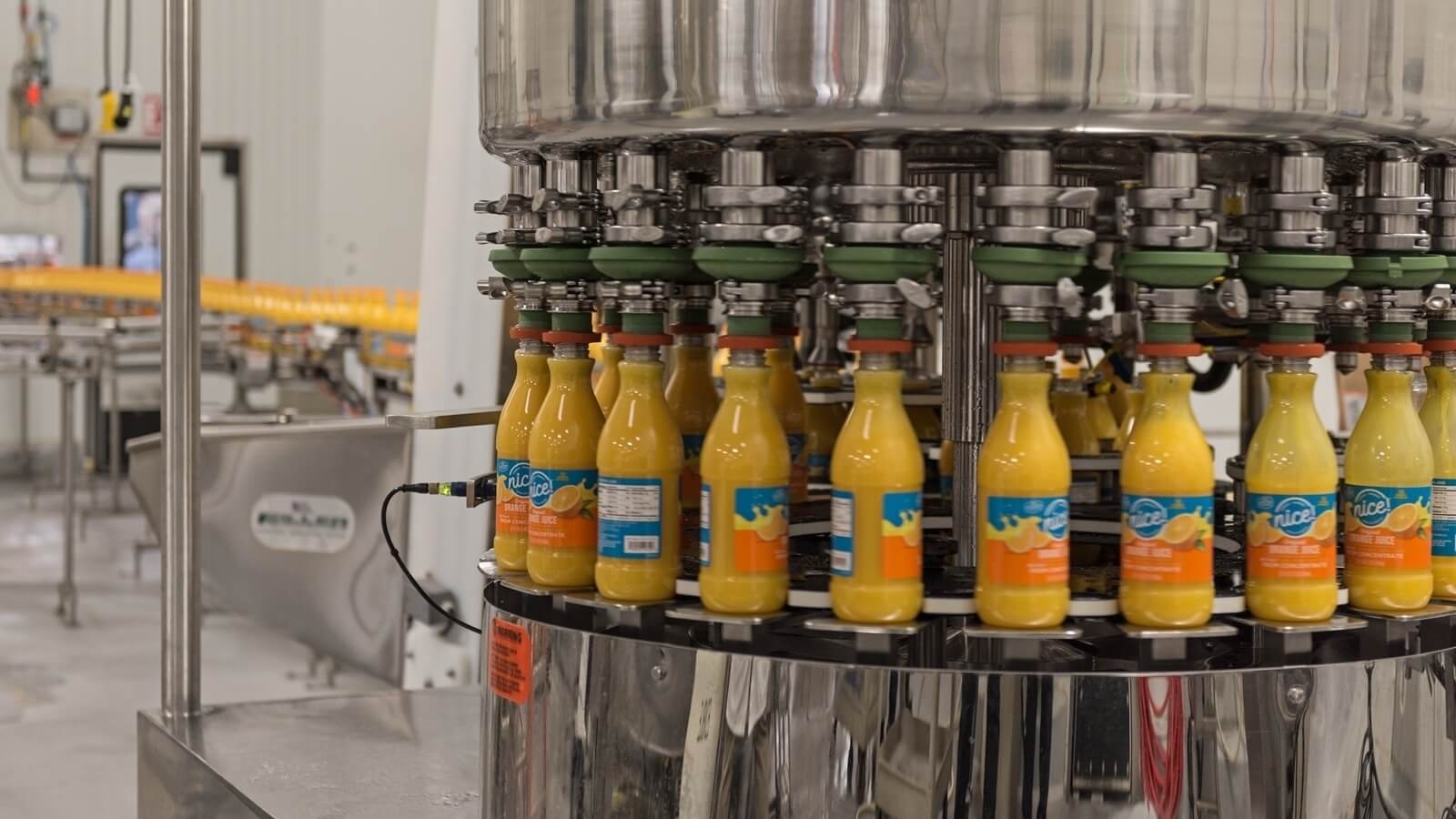
Then, late last year, as part of facilitating the growth in small bottle sales brought on in part by its new retail partnership, the company jettisoned one shaky segment of its institutional business. Then Citrus Systems worked with capital equipment financier KLC Financial to finance the installation of a new bottling line to beef up production of these smaller juice bottles. That new bottling line, he says, runs 25 percent faster than its original small bottling line using robotics and, thus, three fewer people.
“We went from five on the line to two,” says Boehland, adding that the original line will soon be upgraded to match the new one. “We just need a breather before we dive back in.”
Boehland expects the small bottling line to continue growing. His new partner is growing and his company packs juice for many of the nation’s leading grocers and convenience stores. He doesn’t expect to need more technological enhancements in the near future.
“With the two lines right now, we are able to do it,” he says. “We are running three shifts five days a week. At some point you may need to make the jump to seven days.”
While the changes likely would have happened whether COVID happened or not, he’s glad to have made the moves.
“With the addition of the line, we’re able to more than double the small bottle capacity with less than double the people,” Boehland says. “We have flexibility.”
Moving an industry forward
Citrus Systems wasn’t alone in using technology to make the last 18 months more productive. The auto repair industry isn’t known for being fast to adapt, but for one chain of repair shops, COVID-19 provided the push it needed to leap into using 21st century web capabilities.
“Some of the changes and advancements we made are not that significant in the world of technology, but in our industry, they were,” says David Mitchell, president of Heartland Tire.
The company added texting through its software system, so customers could drop off their vehicles without going inside. That also allowed staff, if the customer desired, to text them updates on their service and send pictures showing them what problems they’ve found.
A couple years ago, Heartland had added tire shopping and purchasing to its website and, Mitchell says, last year that functionality was increased to include service.
“The biggest fear is ‘how much are you going to charge me,’” he says. “You’re almost afraid to ask someone.”
Now, customers can go to the website and not only sign up for appointments, but also enter information about problems their vehicle is having. The system then serves them up a preliminary online diagnosis and estimated cost. On occasion, upon further inspection, the computer diagnoses end up not being correct, but it has still been a popular feature.
“The feedback we’ve gotten from the customers has still been positive in the sense that ‘you told me it was probably going to cost me $250 and when I got there, I was already comfortable with that,’” he says. “The fact that it was something different, I still felt more comfortable bringing it in because I had an idea of what I was going to spend ahead of time.”
Heartland Tire recently grew from 21 to 29 locations through an acquisition. Mitchell, by his own admission, is not a techie. But he’s glad the system was implemented. He intends to keep it permanently and eventually roll it out at the new locations because of the positive feedback.
“The reason we did it was for COVID,” he says. “That’s what our thinking was. We wanted customers to not have to have in-store, face-to-face communication. We’ll continue it forever. Our customers are using it because they feel a sense of understanding and comfort before their car comes in.”
Building a “Virtual Village”
Mitchell was recently added to the board of directors at Village Bank, a community bank with several north metro branches. The bank had decided prior to the spread of COVID-19 that it intended to create a “Virtual Village” where customers could utilize online any service the bank offers.
That was already underway because, for example, if a business owner lives in Minnesota but spends part of the year in Florida, Village still wants them banking with Village while they are out of town, says Aleesha Webb, president, adding that whether it’s the business owner nearing retirement or the next generation that might eventually acquire that company, she knows Village needs to have multiple ways to reach that customer.
“They’re not going to be coming into our lobby all the time,” she says. “We want to have resources for them.”
But COVID-19 accelerated that movement, Webb says, adding that the company is just under a year into a three-year plan to make this overhaul. Right now, you can apply for a home mortgage through the Virtual Village. And for the second round of Paycheck Protection Program (PPP) applications last year, the bank had a lending platform online.
Village has found a financial technology company to partner with on outsourcing some of these service enhancements. The company also brought onto its board some new members with background in building and operating technology systems. One is Michael Connly, whose background includes stops with Hewlett-Packard, The St. Paul Companies, UnitedHealth Group and Optum, where he was involved in efforts to fix initial problems with the Healthcare.gov insurance exchange.
Webb and Connly both say customers will drive the changes. Village already makes regular efforts to keep in touch with them. And, as Connly says, adoption will take place at different paces for different entrepreneurs and their needs will not stay static.
“One of the keys is to make sure you offer the services people want when they want them, especially as that evolves,” he says. “So, obviously, in any industry, the security and stability of what you do is critical. But being able to offer continuous improvement in what you can do digitally while seamlessly integrating it with the kind of care and service people expect from the Villagers is going to be absolutely critical for how the bank moves forward.”
She suspects these are discussions taking place with every financial institution and probably every company that had to evolve through COVID-19.
“Every bank is going through this now saying, holy moly, we just made a ton of money off of PPP fee income,” she says. “That’s not coming back or let’s hope it’s not coming back. We need to now understand how we’re going to grow other revenue lines. And any technology that was put in place or any efficiencies that we found through automation, etc., let’s make sure we keep doing that because that’s going to help on the expense side of the income statement.”
Not giving up on physical space
While many companies are moving forward with their technological enhancements and some have announced plans to reduce or renounce their physical office space, one Twin Cities software technology company has gone the other way.
To be clear, Nextek LLC is not jettisoning its technological focus. “Technology is more important than ever before in our industry,” says Senior Vice President Kristina Walch. And the company remains passionate about developing technological improvements for its financial services industry clients.
The company just also believes doing so is easier when workers can get together in person. It recently moved to a new 20,000-square-foot office space that was designed for collaboration. There aren’t assigned spaces, so employees can utilize any available cube or office they want.
The new space fits 200 people on rotation, so the head count could quadruple from the current 46 before size becomes an issue. Employees are only required to come in once a week to talk about strategy, new customers and questions that have arisen.
Ironically, Walch says, the company did not believe in remote work prior to COVID. Now, management has instituted flexible policies. And staff — as well as some clients — let management know they wanted space to get together in person.
“Our employees were craving a place to call home and a place to have that physical connection to be face-to-face when needed,” Walch says. “We designed this building to allow employees to come and go as they need.”
Additionally, she says, they felt last year that they lost the ability to achieve some balance in their lives.
“Creating that degree of separation between work and home life has really become more appreciated over the last year-and-a-half,” Walch says. “It’s not required, but it’s something that, when I want it and when I need it, it’s available. It’s a place they can identify as their home base for work that doesn’t allow work to bleed into their home life as much.”