Jay Sachetti joined Jeff O’Brien, partner at Husch Blackwell and Dyanne Ross-Hanson, president of Exit Planning Strategies talked about the market for mergers and acquisitions, exit planning opportunities for companies that don’t end up for sale and how companies can maximize their eventual sale price during an early October panel at the first Upsize on Tap event at Summit Brewing Co. in St. Paul.
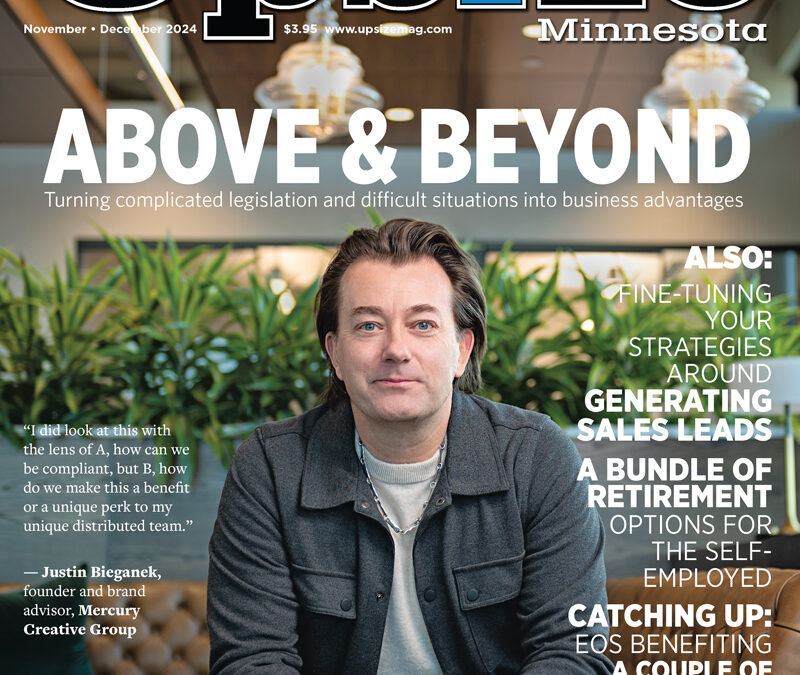
When the state Legislature passed a law requiring employers to provide paid leave and safe time for employees, Justin Bieganek started hearing differing details from friends, colleagues and peers.
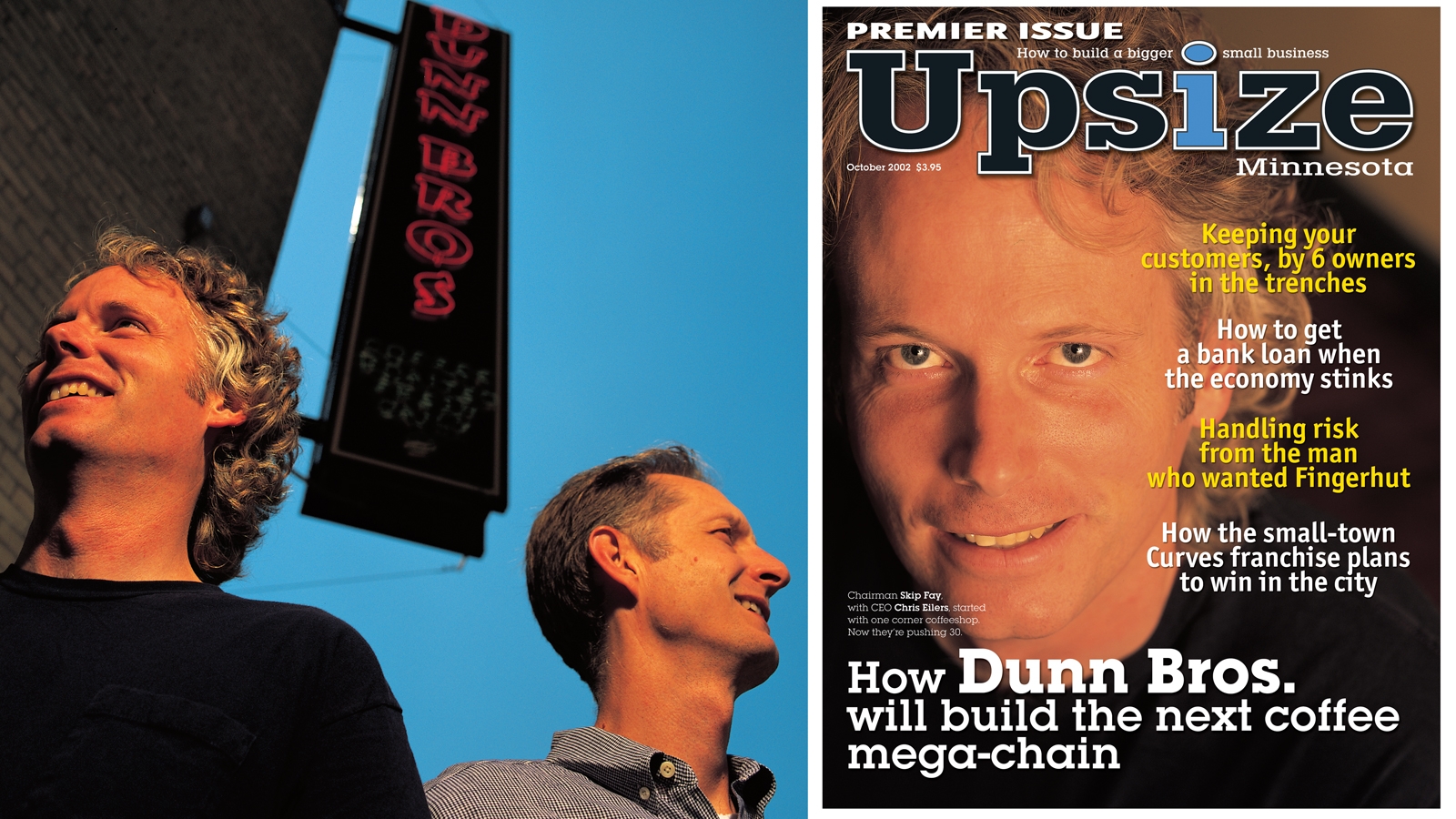
Twenty years ago, Skip Fay and Chris Eilers had just transitioned from Dunn Brothers Coffee franchisees to franchisors. They were enamored with the opportunity to build the coffee shop brand as a place where folks could sip away the day in a smoke-free coffee shop with free Internet access.
“Today it sounds silly, but back in the day that was pretty cutting edge,” says Eilers.
When they bought into the company initially as store owners, they ended up the most successful franchisees founder Ed Dunn worked with. They loved the business.
“The scary part wasn’t should we do it,” then Chairman Fay told Upsize in the magazine’s inaugural cover story in 2002. “It was ‘How are we going to afford it so we don’t lose this opportunity.’”
Eilers and Fay entered just as coffee shops were taking off. Dunn Brothers isn’t the largest such chain, but has generally shown steady growth through economic ups-and-downs and retrenchment in franchising in general. Today, there are just over 60.
Building a business
Fay and Eilers initially met at a social gathering involving their wives, who at the time were working at the YMCA. “We were the outsiders,” Eilers says. “We got to get to know each other a little bit and we built a friendship and shared what we were interested in and there was alignment that we both wanted to do something differently than we were.”
They no longer work together, but during a nearly hour-long call, they completed a few of each other’s sentences and laughed easily while reminiscing about when they did.
One major takeaway for Eilers was finding a business partner he trusted. “If you are going to choose someone to partner with, you need to do your homework and, to me, that is choosing someone that you would want to be friends with, that has the same values as you,” he says. “There’s a lot more partnerships that don’t work because people don’t make those, what may appear to be simple decisions.”
They brought in good people to help and had complementary skillsets and a willingness to experiment, which sometimes worked and sometimes offered opportunities to learn.
“We weren’t afraid to try new things,” Fay says. “Sometimes it works and sometimes it doesn’t, but we were fortunate enough it has worked more than it hasn’t. I learned really early to not be so stuck in my ways that I can’t change because the market changes.”
Eilers recalled an early foray into tea with Dunn Brothers that was not successful. “I was under the assumption that if we can do what we did with coffee in a tea shop format, then how hard can that be?” he says. “The lesson I learned from that experience is that the American coffee culture is not the same as the American tea culture.”
One that did work was bringing food to Dunn Brothers about 10 years ago. The whole industry was exploring it. “They were trying commissaries, they were trying frozen,” he says.
Dunn Brothers hired Executive Chef Andy Revella, who helped put together a menu the company could execute in the stores. Converting was relatively simple. Convection ovens allowed for cooking eggs and making sandwiches.
“We can make delicious food in an acceptable amount of time,” Fay says. “We trusted the process and it worked and I think it really changed the math for our franchisees.”
2017 brought change
Fay remains with the business as its chief coffee officer. Eilers felt compelled in 2017 to try something else. He now runs Jinx Tea, a brand he started with son Sam and wife Jennifer Wills.
“It just felt like the right time for me, after spending 23 years with Skip,” he says. “I love Skip, but I was just ready to try something different. … I was 57 back then when I made that decision and figured if I was going to try something else, I’d better step into the fray.”
The intent was creating a more approachable tea brand focused on cold teas. They tested the market with a food truck in 2018 and opened a retail location in 2019. When COVID hit, they shifted to wholesaling, opening a production facility in 2021.
“That’s been really a lot of fun,” he says. “It’s no different in terms of the challenges that a new brand faces as they try to create market awareness, but we’ve had some good success.”
He’s recently found an investor and is working on developing a shelf-stable product that doesn’t require refrigeration for restaurants, cafes, coffee shops and tap rooms. He’s drawn on his time with Fay while growing his new company.
“It certainly gave me and the company a little more street cred,” he says. “Dunn Brothers is a brand that a lot of people, certainly in this neck of the woods, know about and respect. So, it allowed me to open doors.”
The future?
For Fay, the variety of daily tasks keeps the work interesting. He’s had opportunities to do other things, but ultimately stuck with it. That’s true through the company’s latest transition, as well. Dunn Brothers was recently acquired by Gala Capital Partners in a deal the private investment firm indicated would bring the chain to a wider audience.
“We believe Dunn Brothers is the best-kept secret in the coffee segment,” said Gala’s managing partner Anand Gala, in a statement announcing the acquisition: “We look forward to working with the management team and franchise partners to bring this great product and brand to the rest of the world.”