Jay Sachetti joined Jeff O’Brien, partner at Husch Blackwell and Dyanne Ross-Hanson, president of Exit Planning Strategies talked about the market for mergers and acquisitions, exit planning opportunities for companies that don’t end up for sale and how companies can maximize their eventual sale price during an early October panel at the first Upsize on Tap event at Summit Brewing Co. in St. Paul.
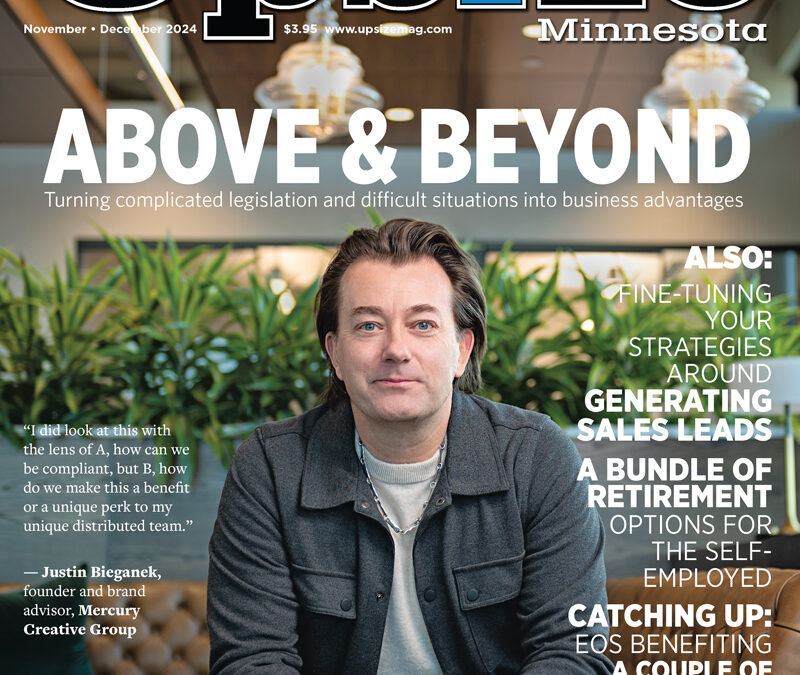
When the state Legislature passed a law requiring employers to provide paid leave and safe time for employees, Justin Bieganek started hearing differing details from friends, colleagues and peers.
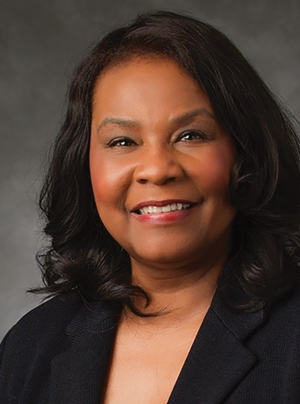
Dorothy Bridges retired from her last job at the Federal Reserve Bank of Minneapolis in 2018 after four decades in banking and financial services. She was serving on a few boards, most notably those of U.S. Bancorp and the Metropolitan Economic Development Association (MEDA), while pondering whether there were jobs out there that might lure her back into the workforce.
When MEDA’s previous CEO, Alfredo Martel, moved on to another role, Bridges found her answer. The former Franklin National Bank of Minneapolis president and CEO took the job and has spent the last couple months meeting with stakeholders and determining next steps.
She shared some early thoughts with Upsize Editor Andy Tellijohn.
Tellijohn: How are things going?
Bridges: Well, it’s like anything else. Transition to new leadership takes some getting used to especially, and I’m talking from the perspective of the staff and other key stakeholders. It takes a little bit of getting used to. What makes it a little bit more manageable is the fact that I’ve been in this space for quite a bit of my professional career and so at least externally on the key stakeholders, I’m a known entity. So, there’s not that concern of what will they do.
I think the key external stakeholders have a pretty good sense of my passion for what MEDA does and how it fulfills its mission. So that kind of level setting is less onerous. In terms of staff. There are a couple people that I have known for many, many years and have worked with for many years with my profession as a banker and utilizing MEDA in the past for some of our bank customers.
And so, the two words that I might use are stabilize and strengthen. Stabilization because this is a staff that we have to acknowledge that they’ve gone through some significant transition and so committing to them that we will be in a position of stabilization and working quite diligently and with an alacrity to do that.
We’re also experiencing the same things that other corporations are experiencing and that’s attrition for reasons other than conscious transition to of the leadership staff. And so, we’re having to move quite quickly to backfill for some key positions. I’m really thrilled that we have the people in place that are doing that for us. And we are meeting with some great results.
Tellijohn: What kinds of positions are you hiring for?
There were a couple positions that were open and these were budgeted positions that were added probably in 2022 that we needed to fill.
And then we have individuals who were retiring We knew that. And so, having that mindset to fill that role is always top of mind for any great chief people officer, right?
Tellijohn: You’ve mentioned your time in the banking profession and your passion for the organization, but you also were retired and presumably didn’t need the role. What made you want it?
Bridges: I retired from the Federal Reserve Bank of Minneapolis in 2018. Part of the retirement really, you know, you think about some of those things that you would love to do and you wouldn’t mind doing if you were called out of retirement.
So, I had that kind of conversation and it’s always been about my passion for growing our communities, particularly BIPOC (Black, Indigenous, people of color) communities, and how I see communities benefiting and growing with what MEDA does.
MEDA helps to build the economy, the local economy. When you have a viable, sustainable businesses located in these communities and you have consumers patronizing these businesses you begin to see some physical manifestations of economic viability in these communities. Creation of jobs is very important for BIPOC communities and having businesses who hire from the community at large has always been an important data point for MEDA clients and for MEDA for that matter. So, job creation as well as being a part of an ecosystem that is healthy and growing and thriving,
Tellijohn: What are your goals for this role?
Bridges: So, the immediate goal is just to have my feet firmly planted in the organization as the CEO and leading in some key areas, building the relationship with our key stakeholders. Those are our funders; those are our clients. Those are other partners that we work with to make magic happen on behalf of our clients.
As you know, MEDA has several different initiatives and several different programs that we bring to the table when we are dealing with our clients. It’s not just about lending or having capital. It’s about really building a strong foundation for businesses as they look at how they want to establish themselves grow and prosper. Those wraparound services, such as business consulting, are vitally important. And so having that connection with those partners are vitally important to me so that I have a really good sense of the expectations. I think I know what the expectations are, but there’s nothing like getting in front of somebody and sitting around across the table from them to hear what they’re saying.
Yes, absolutely. And so that’s job number one. That’s the biggest priority. Of course, the key stakeholder in all of this is of course our board of directors. Getting out and getting in front of the board of directors because they some in most instances represent our other key stakeholders, the big corporations of our area having people who want to contribute their time, talent, and treasure to keep MEDA’s reputation and visibility in those major corporations alive. And so really making sure that I’m connecting with them and helping to really move what we have in our strategic plan along.
Tellijohn: That plan was set in 2020. It’s been a wild couple of years. How do those efforts stand?
Bridges: We’re taking a look at that and how it’s changed because the landscape has changed on MEDA and everybody else, civil unrests, all of these things. And so, we’re making sure that we are touching what we need to touch in terms of the strategic plan to say how has it changed and where do we need to pivot in order to achieve what we set out to achieve a couple of years ago? And also too, do we need to take a look at what we set out to achieve and do? Is that even relevant anymore?
So, for the first six months, that’s what I’m doing. I’m just sort trying to firmly plant myself in the organization now based on the strategic plan and some of these things that were in play prior to my coming aboard it makes sense for us to continue to go down that path.
Building the talent pool in the organization to deliver on contractual things that were promised. And so, for the first year, I see myself as making sure that those things happen and also taking a very strong look at how the landscape has changed for our major stakeholders. And those are people like our business clients and what their needs might be. MEDA has done a wonderful job and it was a planned one, but less assess how successful we are and how can we ramp it up.
MEDA has done a wonderful job in addressing the needs of BIPOC business growth through focusing on opportunities for BIPOC businesses to acquire or merge with other businesses. So, acquisition is a big thing that we are looking into and it puts us in a different space, intentionally, that really pays attention to how to get our business clients past the time that they have survived.
So, now it’s about growth. How do we really bring opportunities to the table to foster that kind of growth that they’re looking for? And doing matchmaking for instance, we, we’ve got this gray tsunami that’s going to happen. We’ve got a lot of people who have companies, particularly in the manufacturing field, that they have no heirs or their heirs are are not interested and they want to retire. And so how do we look for that as an opportunity to really put before our BIPOC businesses.
Tellijohn: It sounds like at least immediately anyway, you’re not looking to immediately change the goals but more to tweak how you’re going about it?
Bridges: Yes, absolutely. How we’re going about it. And then are we thinking about what we were thinking about in the right way? Whenever you have a focus on something that could potentially be pretty big and that can be leveraged, the devil is in the details.
Tellijohn: How would you say the organization is doing so far on meeting these 2025 strategic plan goals?
Bridges: I think the organization is on an appropriate trajectory at this stage. Building systems to accommodate that kind of growth. Also building in operations in terms of talent to accommodate that kind of growth. When you think about growing loans, certainly you can only get in incremental growth if you are relying on the current staffing.
So, we’re really thinking about the human side of things, the human talent side of things, and making sure that we have an opportunity to bring in additional people to help with these efforts.
We’re also thinking about restructuring or reorganizing the departments so that you’ve got people who are here to make life a bit more efficient. MEDA, as a small organization. You’ve got people who are in key roles, but they wear many hats. It just became a habit to do that. And now, taking a look at the growth that we’re anticipating and hoping for in the way we’re structuring these initiatives, division of duties is important. So, you have these various different lanes and sometimes we have people whose highest and best use is being consultative and doing the analysis and getting through their approval process. But we are sometimes using them as clerical.
We’re figuring out those things and making sure that we have the proper infrastructure to really take that leap in the direction that we want to achieve by the year 2025.
Tellijohn: So, you figure you need about six months before you start coming to the table with new ideas or thoughts?
Bridges: Well, when you say new ideas or thoughts it is sort of building on my own expertise in the field of lending, for instance, to build out the kind of infrastructure that would allow us to be proficient at what we’re doing in this space.
When you talk about new ideas and bringing on new ventures for our meter, that needs to be informed by the success we’re having in one area or another. And so, enhancing those things is going to be critically important as we proceed with enhancing what we’re doing here. Because I really do believe we’ve got some good stuff here, and so, how do you take it to the next level?
I’ll give you an example. We have a program called the Ascend. This is where we are working with major corporations, and these are global corporations that happen to have headquarters here in Minnesota. And we have BIPOC businesses who provide certain goods and services. And how do we get this matchmaking going where supplier diversity officers are looking at BIPOC businesses to be in that procurement chain for these goods and services. That certainly benefits our client, our BIPOC business. And it’s a mutual benefit. It benefits the supplier development department of these major corporations. So, how do we enhance that program? What other things can we look to just make this relationship even more successful?
Tellijohn: I imagine you’re drawing on your history, you spent a decade at Franklin Bank here in town and you’ve mentioned your time at the Fed. How are your experiences and your network helping further these goals?
Bridges: Working that network, that’s the other piece of what I’ll be working on in the ensuing months, reconnecting with people whose work I’ve appreciated and who are known entities to me and really just saying, ‘Okay, I’m here. We had this common passion for this stuff. I really would love to have you help out.’ And that help comes in a variety of ways, right?
Tellijohn: What are you hoping to see from the business community as this plays out? Anything new? Anything additional?
Bridges: Maybe not changes necessarily for some, but more of. Let’s put it on steroids. And if you believe in MEDA, you play in the field of providing capital as a business to meet us for some of the programs and services that we have, let’s put that on steroids and let’s just do more of that.
If you are providing consulting, professional consulting with some of your staff who have subject matter expertise and key areas where our business clients need, let’s put that on steroids, because their need is still there. Just pulling all of those resources together. I think we’re at an opportune point that we can really be successful at it. It used to be that MEDA used to have to really work hard to sell its value proposition. Well, over the last 50 years, MEDA’s reputation has definitely been at the forefront. And so, we capitalize on that reputation and that visibility is really an opportune time for us now. Also, too we have many corporations wanting to lean in, but maybe not quite sure how they do that. Well, we want to put MEDA out there as the subject matter expert on that. Not the only one, but a subject matter expert.
Tellijohn: We’ve gone through the post-COVID recovery but we’re likely headed into recession with some inconsistent economic indicators. Interest rates are up. How is MEDA affected by these factors?
Bridges: Well, it definitely, especially the interest rate rise, it definitely affects us, but that’s always there and you always have to plan for that. So, you do scenario planning and you figure out what other assistance might be needed to bring to the table. And it’s not just about the lending part of it. Maybe the capital stack needs to be utilizing another partner who is not necessarily interested in getting a return of a nature that would be considered a market rate. It might be, ‘I’m willing to accept a lower rate of interest because I strongly believe in the qualitative stuff that occurs with this relationship more than the quantitative.’
And so, looking at ways that we can bring other resources to the table. Sometimes when we talk about capital, we talk about it one dimension. It’s only in silos, not one dimension, but in silos. So, somebody is doing investment capital, somebody else is doing lending capital, somebody else is doing grant capital, it’s all capital. So, taking a more holistic view at what the needs of a borrower might be.
MEDA can play an integral role in getting those needs met. And that’s either directly for our own services or is in partnership with others.
Tellijohn: If somebody wanted to reach out to meet a, and get some assistance or partner with you in some way how should they get in touch with you?
Tellijohn: Is there anything else you’d like to add?
Oh, well, absolutely. It’s, please if you have plans as a BIPOC business for growth and you need consulting assistance, you need capital assistance, you need matchmaking assistance, procurement assistance, MEDA is available to you.