Jay Sachetti joined Jeff O’Brien, partner at Husch Blackwell and Dyanne Ross-Hanson, president of Exit Planning Strategies talked about the market for mergers and acquisitions, exit planning opportunities for companies that don’t end up for sale and how companies can maximize their eventual sale price during an early October panel at the first Upsize on Tap event at Summit Brewing Co. in St. Paul.
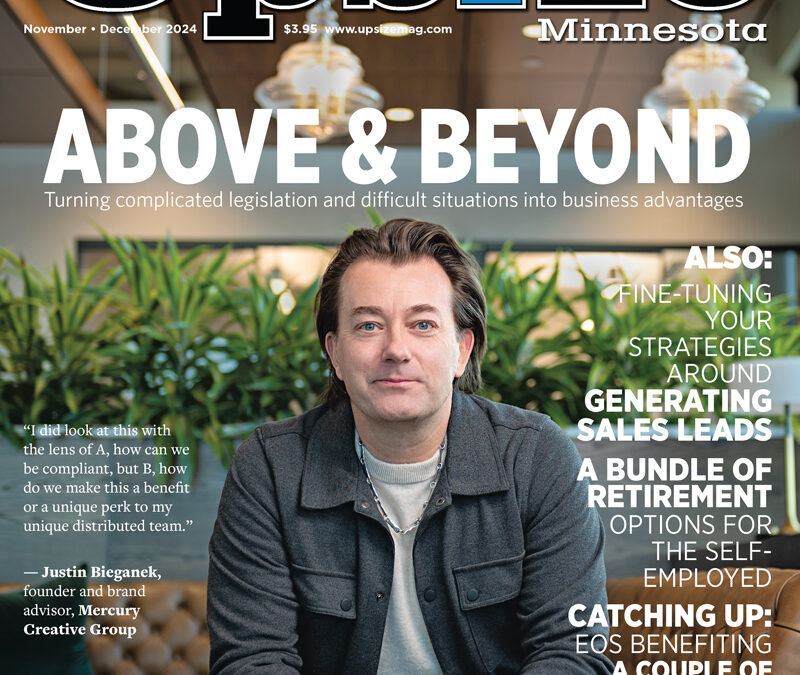
When the state Legislature passed a law requiring employers to provide paid leave and safe time for employees, Justin Bieganek started hearing differing details from friends, colleagues and peers.
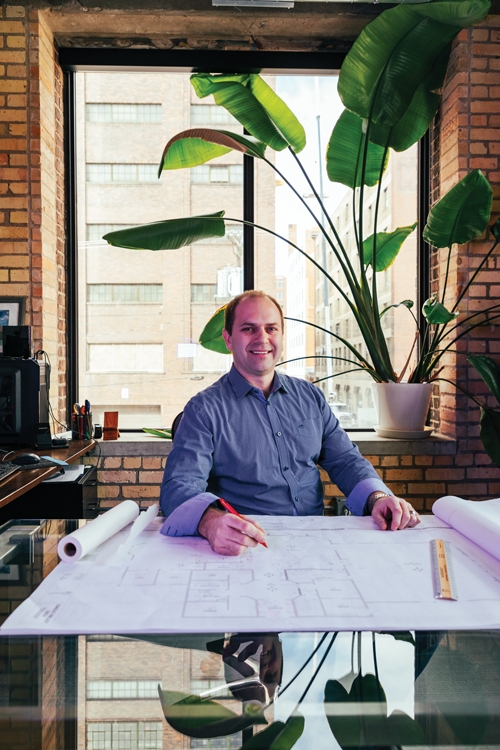
Studio M Architects has helped design some funky, iconic restaurants, bars and retail spaces in the Twin Cities and across the country.
It’s a small team of five, though Principal Adam Meyer has a team of contractors and another company he can call to partner with when the workload gets heavy.
Prior to COVID, Studio M employees worked exclusively in the company’s North Loop offices in Minneapolis. That flipped to entirely virtual during the pandemic and, like many companies, Meyer and his team have since adopted a more flexible hybrid approach.
“We have a really flexible schedule,” he says. “We try to shoot for a minimum of four days in the office, sometimes three depending on people’s schedules.”
Consulting staff on a policy
Much of the work done at Studio M involves collaboration — looking over drawings and doing mentorship. “We have a lot of younger people in the office,” he says. “You can point and touch and communicate a little simpler. We like that. We all agree that full-time remote is not for us.”
Meyer set the new four-day policy collaboratively. He sought input from employees in arriving at Wednesday as the flex day.
“This is not an authoritarian regime,” he says. “I try to include them and make them feel a part of the team. If I’m just telling them what to do all the time, that’s different than sort of letting them help us figure out how to navigate forward. Letting them own some of the decisions is good.”
That’s true not just within Studio M but with the contractors and reps from the partner company when it is called in to help. “We’re definitely meeting virtually, in-person and on-site,” he says. “They’re as active and vocal on some of our projects as we are.”
So, even with the new policy, he’s frequently had people work remotely more than once a week so they can stay with sick children, avoid weather issues or attend appointments. In-person works best, but Zoom meetings suffice at times.
“We really haven’t said no,” Meyer says. “Any weather-related issues? We just don’t come in. Everybody’s on a laptop, so wherever they are, their office is there.”
Companies updating culture
Studio M is one of many businesses of all sizes that has and continues to deal with cultural issues around where and when people can work and how a younger generation of workers differ from near retiring baby boomers.
Another is Village Bank, generally an upbeat place to work with many employees having longevity nearing 20 years. But the company has experienced some increased turnover the last couple years, especially within the teller ranks across its four locations. So, many of its 70 employees also are within their first two years on the job.
Also, Village is adapting from having switched from being a fully in-person workplace to a hybrid environment.
“I would say this is something that we’ve had to evolve through COVID,” says Kelly Klopotek, chief experience officer. “That’s a big driver for us. And then there is making sure there is more collaboration across departments and across locations so that they have a similar and shared experience.”
Village Bank leaders also want to improve at helping employees with their personal and professional development to improve retention because “they’re able to go across the street and make more money,” Klopotek says. “We want to invest more. We think that’s important. We do some of that already.”
Upfront work
Village’s moves have buy-in at the top. In practice, company officials contracted withHeather Polivka, CEO of HeatherP Solutions, to assist. They’re in the early stages of working together as Village navigates moving forward.
Polivka says a lot of companies are working through cultural issues that were more easily defined in the past when everyone was sitting at a desk next to each other. The new hybrid work scenarios require some changes on things like how people are going to communicate, celebrate successes, resolve conflict and count on each other. The younger generation of workers between 26 and 40, who value relationships and meaning over money, also require a different outlook.
“It’s a bigger deal than it has been in the past,” she says, adding it is better to deal with that upfront than leave issues unaddressed and festering. “It just takes attention and design to make sure that we can maintain collaboration if we’re not in the same workplace or working there at the same time. It requires people to be willing to try and to maybe even struggle and embrace new approaches.”
Polivka suggests starting with putting mission and values, employee recognition strategies, intolerable behaviors and other aspects of the culture down on paper, all the while seeking feedback from employees on what those should look like.
“Those are all the various dimensions of culture,” she says. “And why most businesses are struggling is they just haven’t. It doesn’t have to be a big thing.”
Polivka also suggests leaders keep an open mind and embrace a willingness to try new things, learn and grow.
“You know, there was a time where email seemed really crazy and we couldn’t imagine that would be one of the primary ways we communicate,” she says. “We have to evolve with the times. And this is one of those times.”
In person get-togethers
So, how do you make it work? Several culture consultants said even in the most virtual of companies it’s best when employers can get people together in person at least occasionally. If not everyone can make it, proactively find ways to make sure they feel included. Polivka came across one company that had an on-site garden used to grow food for employees. The company sent hybrid and remote workers an herb garden and asked people to share how they used it or recipes they created.
But in order to foster that togetherness, when possible, many companies are seeking at least one or two days a week, everyone come in on the same day, says Hillary Feder, CEO of Ask Hillary’s.
“Everybody, barring having a sick kid at home, should be in on Tuesday and Thursday and you can pick the third day,” she says.
Then, it’s about building moments. Whether it’s a time to collaborate on a project, celebrating a success or a team building moment, there is a reason for those hybrid and virtual workers to come in together.
It’s also important, Feder says, for mentoring purposes. A high-level official at one of her clients told her, “What’s getting lost and what my senior level advisers aren’t getting is that they’ve forgotten what it is like to be younger and newer,” shesays, adding that in the virtual world, those off-site employees can’t knock on a supervisor’s door for assistance.
“These water cooler conversations don’t happen over a digital platform,” she says. “I’m not going to send you an email and say ‘I really want to talk to you about X.’ It just doesn’t happen. It’s too stiff.”
For those whom geographic distance creates greater challenges to in-person meetings, Feder recommends making sure they can meet up at least a couple times a year. Her son, a journalist on a remote staff, works for a publication that entails considerable travel. The company pairs them up in teams “so that even when they’re out on the road, they may see each other,” she says. “I really coach how can you get your team together, especially in a virtual team, live and in person, no less than twice a year and ideally four times.”
But make it meaningful and have a purpose.
“There are so many different reasons, whether that means you’re celebrating your five-year anniversary or hiring your 100th employee,” she says. “You just have to figure out meaning and put meat behind it.”
Define your culture ahead of time
Mark Komen, president of Kodyne Inc., is a mentor of Studio M’s Meyer. He says being conscientious and inclusive toward hybrid workers doesn’t require “some kind of hybrid-specific culture.”
Rather, you need to look at your existing culture, line up expectations on how you are going to operate your business, and just plan accordingly.
“That should be under any circumstances,” he says. “Norms and expectations for how we are going to perform tasks and interact with people, those should be pretty well defined. If they’re not, that could be an issue.”
Now, if you were a 100 percent in-person business and you’ve shifted to hybrid since COVID, you may need to adapt that culture to your current circumstances in order to keep it constructive.
“How agile are you,” he says. “A lot of highly conventional organizations go, ‘Here’s the book, here’s how we’ve always done it.’ If you have a good book, that’s wonderful. Does it still apply in an environment where after staff is out of the office or at some remote site?”
Luckily, small businesses can be nimbler and change quickly when necessary. Komen recommends finding ways to get employees involved together for a cause. “I’ve been a big proponent of small focus groups, employee focus groups, just to get folks engaged,” he says. “I’m also big on one-on-one. I know that gets tough if you have 100 employees, but I think being able to touch and have a private conversation with everybody to the extent you’re able is important too.”
Ultimately, if the company has a strong culture in place when tough times hit, a new challenge will not push it off course.
“For people that have their hands around what their culture is, if it’s working for you, you want to strengthen it and not let the rough waters of the day impact what you’re doing,” he says. “You may have to modify things, change some stuff, but at the end of the day are you living the values the company is designed around?”
Culture is coming, be proactive about it
Ultimately, whether employees are working for a large or small company, they’re looking for something to get behind, says John Christensen, CEO at ChartHouse Learning and founder of the Fish! Philosophy that functions around four principles: play, be there, make their day and choose your attitude.
That program is 25 years old now, but applies, he says, maybe more than ever. Today, with employees sometimes scattered, they still need to embrace what the company is about.
“Then managers, leaders can talk to people in the field and say, ‘are you making people’s day?’” he says. “Are you getting people engaged in conversations that are making people’s day?”
With employees in more of a power position than ever, it’s more important for companies to embrace this. “Business wasn’t hurting then like it is now, with people quiet quitting, people resigning,” he says. “Why are nurses striking? Why are teachers leaving? It’s because we’re not treating them properly. We’re not having an environment where they’re cultivating the people and acknowledging what they bring to the table.”
Whether working in an office or at home, it comes down to engagement. It shouldn’t be forced, he says. Engage them. Treat them as humans.
“We’re talking about human beings. We’re herd animals. We need that human interaction,” Christensen says.
After all, culture will happen one way or the other, so you might as well be cognizant of it.
“You’re going to have a crappy culture if you don’t pay attention to it,” he says. “Or you can have a great culture if you intentionally build it and talk about it. Either way, you are going to have a culture. It’s going to happen anyway, so why not be intentional?”
Twenty-five years of FISH!
By Andrew Tellijohn
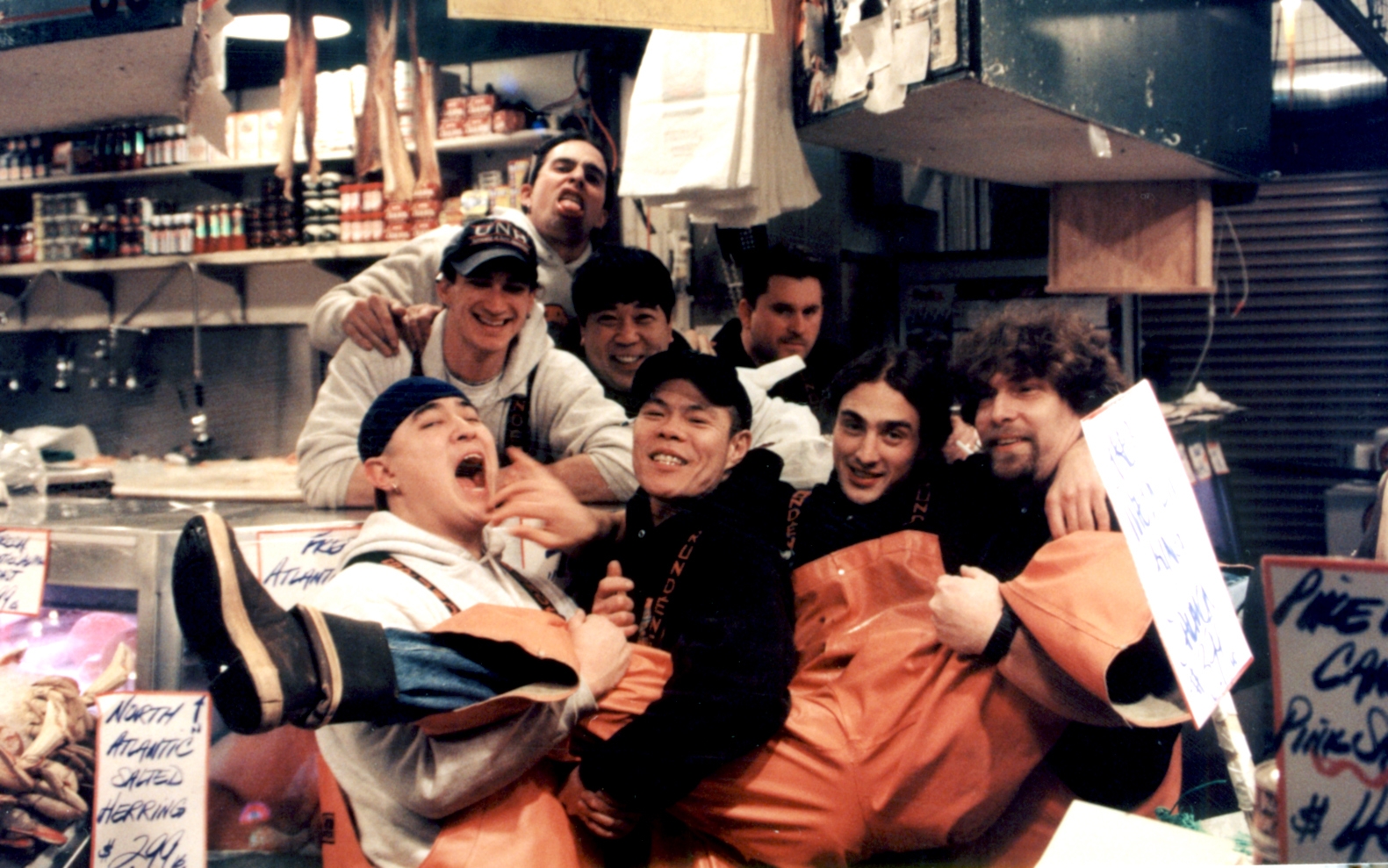
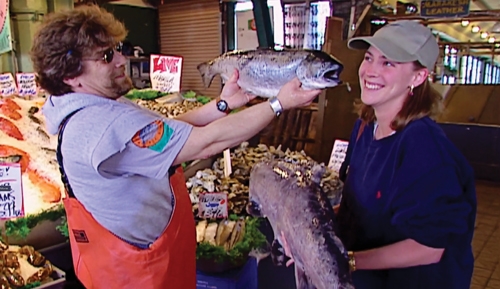
It’s been 25 years since John Christensen was on a visit to Seattle when he encountered Pike Place Fish Market, the open-air seafood store at the corner of Pike Street and Pike Place.
Christensen, CEO of what is now ChartHouse Learning, had just taken over leadership of the company from his father, documentary filmmaker Ray Christensen. He was mesmerized by how a group of employees had turned the relatively routine act of buying fish for dinner into a famous routine involving throwing fish, playing games and performing for customers.
“I saw these guys engaging in their work in such a way that was really incredible,” he says. “I mean, they hugged their customers. Where do you see people being hugged?”
They connected in other ways, as well. In one instance, one of the fishmongers took a crawdad and playfully tried attaching it to a young boy’s jacket. The boy wasn’t amused, however, crying and fleeing to find mom. The worker got down on his knees to apologize to the boy and gave him a hug.
Christensen, in an interview, contrasted that moment with one where he was checking his daughter in at a children’s clinic during an asthma attack and the receptionist didn’t even look up to take their information.
“I saw more love and care happening with the little boy in a fish market than I did in the healthcare system,” Christensen says. “And it was like, ‘wow, this is an incredible place. Look at this engagement they have.’
“So, I knew there was magic there. There was customer service, there was having fun at work.”
That experience turned into the Fish! Philosophy. Christensen interviewed much of the staff, created an 18-minute video and came away with a training solution aimed at helping companies build a culture where people bring their best to work.
The video starts showing employees at the Pike Place Fish Co. in Seattle regaling potential customers by tossing fish back and forth and engaging with people while clearly enjoying what could otherwise be mundane work.
“Energy! Passion! Fun!,” scrolls on the screen. “Everyone at world famous Pike Place Fish Co. chooses to bring these things to their work. Let’s go behind the scenes to see how they do it.”The crux of the philosophy boiled down to four main points:
Play — a mindset that boosts engagement and creativity and brings new energy to everything you do.
Make their day — everyone wants to be appreciated and every interaction is an opportunity to make a positive impact on people.
Be there — being fully present strengthens trust, teamwork and service.
Choose your attitude — you have the power in every situation to choose whether you’re engaged and helping everyone around you or not.
So, it isn’t about throwing fish. As one of the employees in the video says, “once you start imitating us, you’re stuck.” Rather, it’s about creating your own environment for having fun doing what you’re doing, being engaged in your work and giving customers the best of you.
Fish! spun off quickly into a couple of books and facilitation programs.
It took off quickly within education and healthcare industries, Christensen says. One hospital in Woodbury, he says, built a tackle box filled with candies and trinkets that anyone from employees to doctors to nurses to patients could take to give to someone with a Post-It note telling them how they’d been helpful. “This really hit a chord with people,” he says. “This film is not just only about customer service, it’s about how we engage in our work.”
And it’s held up pretty well, he adds, saying it’s almost more important today than it was a quarter century ago with people “quiet quitting” due to being miserable or actually leaving their companies in droves in recent years.
“Why are they leaving? Why are nurses striking? Why are teachers leaving?” Christensen says. “It’s because we’re not treating them properly. We’re not having an environment where they’re cultivating the people and really acknowledging what they bring to the table.”