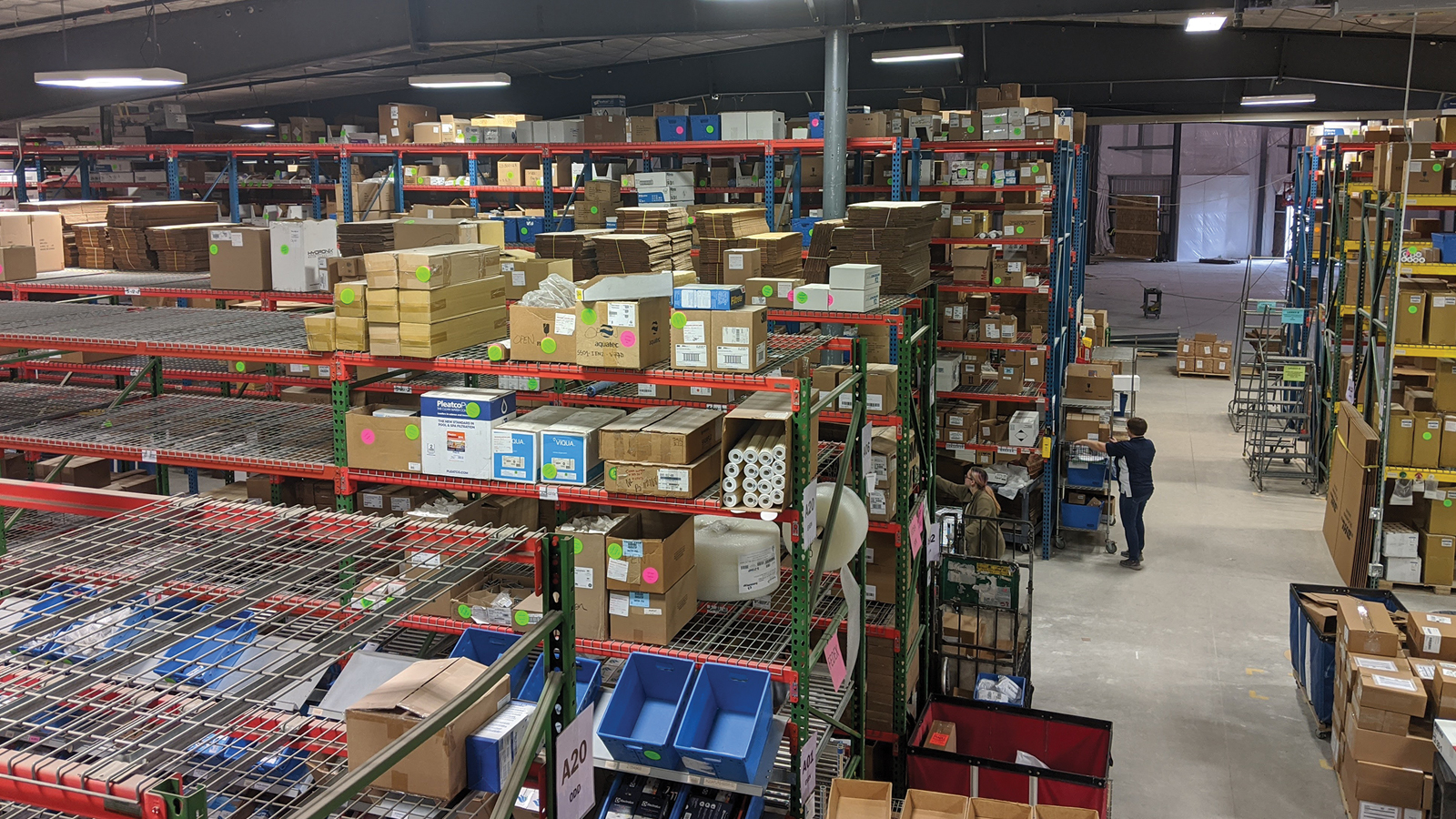
When Jamin Arvig told Upsize in 2014 that his company, WaterFilters.net, was in its first chapter and that the book was certain to be a page turner, he was not kidding.
The primarily e-commerce-driven water filter company had hit $37 million in revenue, up from $17 million in 2011 and $10 million in 2010, from selling water filters online from a distribution center in Zumbrota.
Since then, Arvig, co-founder, has capitalized on the e-commerce expertise built up in those early years of WaterFilters.net and started, acquired and spun off many companies.
That original company is now part of aiC Brands, which buys and grows ecommerce brands using its expertise in marketing, operations and technology. That company has been on the Inc 500 Fastest Growing Businesses list and been a finalist for an integrity award from the Better Business Bureau.
“We’ve evolved a lot,” he says. “We’ve expanded to a lot of different product lines. The water business is one of many other aiC Brands. We still have it. We have toy brands and kid brands and electronics and other types of products in aiC Brands that we own and operate.”
Arvig also is co-founder of aiCommerce, an intelligent marketplace management company powering profits for brands, manufacturers and large resellers trying to own online channels.
Then there’s Brands 10X, which helps ecommerce companies go to in-store sales.
“We’re multi-channel online, but now even offline as well,” he says. “When we started over 20 years ago, it was possible to run a business out of a garage and compete with Walmart. We know because we did it. But after so much has changed and sophistication levels have gone up dramatically, companies need to have the sophistication of a $1 billion dollar company to operate now. That’s what we do.”
And, if that wasn’t enough, he’s on the board of advisers for Thrasio, a top 25 Amazon seller and one of the largest acquirers of Amazon businesses.
What happened?
Arvig says the company focused on water filters for quite a while building momentum, scale and expertise. Early on, he passed on many opportunities.
“I think when people were calling on us to see ‘How are you doing what you’re doing,’ that was kind of the turning point,” he says, adding that his company can fulfill for the likes of Amazon, Walmart, direct-to-consumer websites, the whole gamut.
The company does fulfillment and management of other companies’ and people’s orders.
“So, we manage all of the strategy and marketing and execution to make sure their sales grow. Advertising, case management and there is customer service — a million things that go into it behind the scenes,” he says. “We had to build all of this technology for ourselves way back then. We’ve been doing this for 20 years and then, as it got more complex, very few can do this.”
This was not, he says, the initial intent. Arvig was, at first, focused on water filters. But at a certain point it was clear there were opportunities available partnering with others that dwarfed the original idea.
“After we had scale on water heaters, and lots of other opportunities, and we could digest those opportunities, then it made perfect sense to expand into those other product categories,” he says.
Always an entrepreneur
Not bad for a guy with law and engineering degrees, right? Turns out he was always an entrepreneur.
“I just didn’t know how to prepare to be an entrepreneur at the time,” he says. “With all the lessons learned, I might do it differently now. But I am grateful for the education. I learned about the world via various clubs all over campus during engineering school. And I learned how to learn in law school, in addition to learning applicable things like business law, patent law and real estate law.”
What were the lessons learned along the way? There were many. First, he discovered Entrepreneurial Operating System (EOS) and Scaling Up, each of which he says is better than the systems he was using to build WaterFilters.net.
Second, he joined Entrepreneur’s Organization (EO) and Young Presidents’ Organization (YPO) peer groups and has found them “phenomenally helpful” for bouncing ideas around. “I wish I had done that earlier,” he says.
Third, he spent a lot of time at Harvard Business School learning about different business models. He would encourage business owners to learn more about those earlier so they understand more about the options they have before getting started.
“Some business models are better than others,” he says, adding that familiarizing themselves with different options can help in the event the company needs to change direction at some juncture.
“The vast majority of people say, ‘Now my business isn’t worth anything and it’s going to go down forever,’” he says. “Understanding business model opportunities and how to pivot is important to stay ahead of the game.”
Finally, Arvig says, he’s learned a lot about the importance of differentiation. In fact, when he’s investigating potential deals, a strong product that is differentiated is one of the key things he’s looking for. It could be in the branding or a new technology or something else, but it has to be different.
And it can’t just be different on the day the business starts, either, it has to stay unique. “If that’s the case, you know your business can own the market,” Arvig says. “The other things would be that they understand the value and learning from peers, learning from implementing some of these management operating systems to help scale and always being ready and willing to pivot hard and fast and boldly to stay ahead.”
What would it be today?
While Arvig made his run on perfecting ecommerce, his final advice was to focus on what the needs will be tomorrow, not yesterday. A few years ago, it was drones, 3D printing and blockchain. Now?
Artificial intelligence.
“We can see today this stuff works and is disrupting industries left and right,” he says. “My view is that it’s going to be more dramatic in its impact than any of those areas that were forecasted to have great impacts combined.”